Back
How to Choose the Right Boom Barrier for Your Parking Area
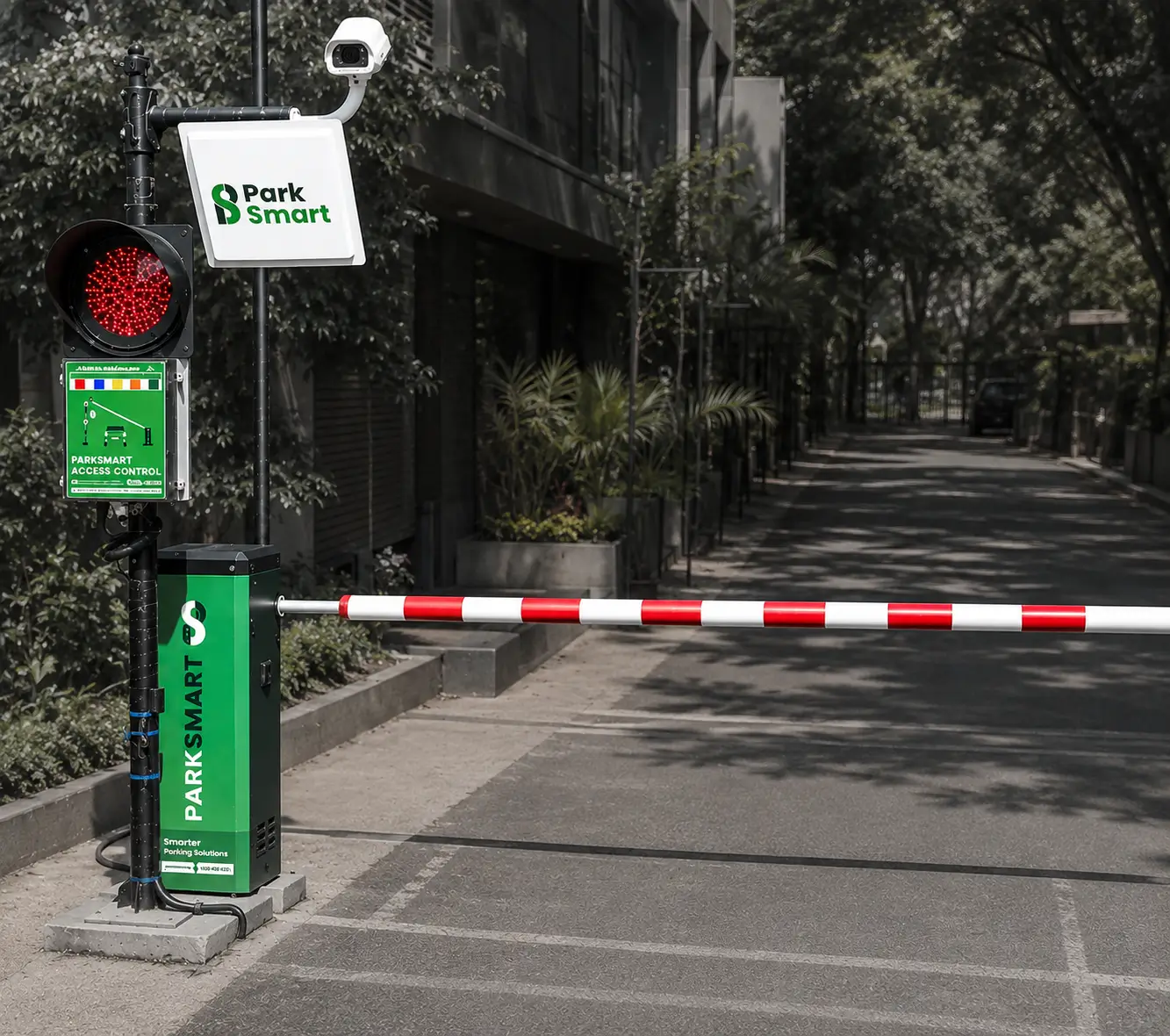
Important factors to check before buying a boom barrier for your parking facility.
How to Choose the Right Boom Barrier for Your Parking Area
Choosing a boom barrier for a parking area requires more than checking its price or appearance. The barrier must handle the number of vehicles using the entrance, fit the available space and work reliably throughout the day.
A system designed for a small residential society may not be suitable for a shopping mall or a busy commercial building. The wrong choice can lead to long vehicle queues, frequent maintenance and problems with vehicle access.
Before purchasing an automatic boom barrier, it is important to understand your parking requirements. Here is what you should consider to choose the right system for your property.
Understand Your Parking Area and Vehicle Traffic
Start by looking at how your parking entrance is used every day. Count the approximate number of vehicles entering and leaving the property, and pay attention to the busiest hours.
For example, an office building may experience heavy traffic in the morning and evening, while a shopping mall may receive more vehicles on weekends. A hospital, on the other hand, needs an entrance that can handle vehicle movement throughout the day.
This information helps you decide how frequently the barrier will need to operate.
A standard automatic boom barrier may be enough for a small parking facility. However, an entrance with frequent vehicle movement may require a model designed for a higher operating frequency.
Do not select a barrier based only on the average number of vehicles. Consider the busiest periods when planning the system.
Choose the Correct Boom Arm Length
The boom arm must cover the vehicle entrance properly. If it is too short, vehicles may be able to pass around it. If the selected arm is too long for the barrier mechanism, it may not operate as intended.
Measure the clear width of the entrance before selecting a model. Also consider nearby walls, dividers, security cabins and pedestrian pathways.
The site layout matters here. A narrow entrance may need a different arrangement from a wide commercial vehicle lane. Basement parking areas may also require a folding arm if there is limited overhead clearance.
It is better to get the entrance measured by the installation team rather than selecting an arm based on an estimated width.
Check the Opening and Closing Speed
The speed of a boom barrier affects how quickly vehicles can move through the gate. If the barrier takes too long to open and close, vehicles may have to wait, particularly during peak hours.
However, choosing the fastest model is not always the right decision.
The required speed depends on the number of vehicles, the available waiting space, the arm length and the barrier's operating mechanism. A small residential parking area may not need a high-speed barrier, while a busy commercial entrance may benefit from faster operation.
Ask the supplier for the opening and closing time of the proposed model. Also check whether that speed is suitable for the selected arm length and expected daily usage.
Check the Motor and Operating Capacity
A boom barrier motor handles repeated opening and closing throughout the day. It should be suitable for the amount of work the system is expected to handle.
One specification worth checking is the duty cycle. It indicates how frequently the equipment is designed to operate under its rated conditions.
For example, a barrier at a small office entrance may operate less frequently than one at a busy mall or commercial parking facility. Installing a low-duty model at a high-traffic entrance can increase wear and lead to more maintenance.
Before making a purchase, ask the supplier about the motor type, rated operating frequency and recommended usage limits. Make sure the proposed model can handle your property's busiest hours.
Give Safety Sensors Proper Attention
Safety should never be treated as an optional part of a parking barrier installation.
A vehicle may stop underneath the arm while waiting for another vehicle to pass. If the barrier does not detect the vehicle correctly, the arm could start closing when the entrance is not clear.
Different safety devices help reduce this risk.
A loop detector uses a sensor loop installed in the ground to detect vehicles. Infrared photocells use a beam of light to detect an interruption in their path. Some barrier systems also include obstacle detection and warning lights.
The right arrangement depends on the site layout and the barrier controller. Ask the supplier which safety devices are supported and how they work together.
Also make sure pedestrians have a separate, safe route. A vehicle boom barrier should not be used as a pedestrian access gate.
Decide How You Want to Control Vehicle Entry
The way vehicles are authorised to enter your property is another important factor. A boom barrier can be operated through different access methods, depending on the system installed.
For a smaller property, remote control may be enough. Security staff can check a vehicle and operate the barrier when entry is approved.
For residential societies and offices, RFID access can be useful. Registered vehicles use RFID tags or cards, allowing the system to identify authorised users.
ANPR (Automatic Number Plate Recognition) is another option. It uses a camera to read vehicle number plates and can be used with a compatible access-control system to manage registered vehicles.
The best option depends on how your property handles residents, employees, visitors and delivery vehicles. Before purchasing, confirm that the selected access system is compatible with the barrier and any existing parking software.
Consider Power Backup and Emergency Access
A power failure can interrupt automatic boom barrier operation. This can become a problem when vehicles are waiting at the entrance or when the property needs to maintain access during an emergency.
Before buying, check whether the model supports battery backup and whether a manual release mechanism is available. Ask the supplier how the barrier should be operated when the main power supply is unavailable.
The security team should also know the correct emergency procedure. Do not assume that every automatic boom barrier comes with the same backup arrangement.
Check Weather Protection and Installation Conditions
If the barrier is installed outdoors, it may be exposed to rain, dust, heat and humidity. These conditions should be considered before selecting the equipment.
Check the cabinet's protection rating and whether the model is suitable for outdoor installation. The mounting base, electrical connections and cable routing also need proper planning.
For basement parking, available ceiling height and arm movement are important. For outdoor entrances, the installation area should have suitable drainage and enough space for vehicles to approach and pass safely.
A good barrier can still create problems if it is installed in an unsuitable location.
Compare Warranty, Maintenance and Service Support
The purchase price should not be the only factor when comparing boom barriers. A system also needs regular inspection and access to service support.
Before finalising a supplier, ask about the warranty, spare-part availability and recommended maintenance schedule. Find out whether service support is available in your city and how breakdown complaints are handled.
A cheaper model may not be the better choice if replacement parts are difficult to find or servicing takes too long.
For a property that depends on daily vehicle movement, reliable after-sales support can make a real difference.
Which Boom Barrier Is Suitable for Different Properties?
The requirements can change depending on the type of parking facility.
Residential societies: Focus on reliable daily operation, resident access and safety sensors.
Office buildings: Consider employee access, peak-hour traffic and integration with an access-control system.
Shopping malls: Prioritise vehicle flow, operating frequency, and parking management requirements.
Hospitals: Prioritise reliable operation, safe vehicle movement and emergency access arrangements.
Factories and warehouses: Check lane width, vehicle type, operating frequency, and available space for installation.
There is no single boom barrier that is best for every property. The right choice depends on the actual site conditions.
Final Checks Before Buying a Boom Barrier
Before placing an order, make sure the supplier has checked the entrance width, expected vehicle traffic, boom arm length and operating frequency. Discuss the safety devices, access-control method, power backup and installation requirements.
Also get the warranty and service terms in writing. These details can help you compare different models and avoid problems after installation.
Also read→
Boom Barrier Not Working? Common Problems and Fixes
Frequently Asked Questions
Which boom barrier is best for a parking area?
The right boom barrier depends on vehicle traffic, entrance width, operating frequency and access-control requirements. A small residential society may need a different system from a busy commercial parking facility.
What boom arm length should I choose?
Measure the clear width of your vehicle entrance before selecting the arm. The supplier should confirm the suitable length based on the barrier model and site layout.
Is a high-speed boom barrier necessary?
Not always. High-speed barriers can be useful at busy entrances, but the required speed depends on vehicle movement and the system's operating capacity.
Should I choose RFID or ANPR for my boom barrier?
RFID is useful for registered vehicles using tags or cards. ANPR identifies vehicles through their number plates. Your choice should depend on the entry process, vehicle records and system compatibility.
Can an automatic boom barrier work during a power cut?
This depends on the model and its backup arrangement. Check whether battery backup or a manual release mechanism is available before purchasing.
What should I check before buying a boom barrier?
Check the arm length, opening speed, motor capacity, safety sensors, access-control compatibility, installation conditions, warranty and after-sales service.
Also read→
Boom Barriers: Types, Features, Prices, and Applications
Choose a Boom Barrier That Matches Your Parking Needs
A boom barrier should be selected according to the way your parking area operates. Checking vehicle traffic, entrance width, safety requirements and maintenance support before purchasing can help you avoid the wrong equipment.
ParkSmart provides boom barrier solutions for residential societies, offices, malls and commercial parking facilities. The right setup can help manage vehicle entry and exit according to your property's requirements.
Planning to install a boom barrier? Explore ParkSmart Boom Barrier Solutions to discuss a suitable option for your parking area.

Automated Gate Access & Parking Revenue Optimization
Eliminate manual errors and stop revenue leakage with automated RFID boom barriers, live occupancy tracking, and multi-mode POS payment processing for commercial properties.
144,200
+
Cars Managed by ParkSmart
110,100
+
Transactions Processed Daily
2,900
+
Parking Locations Integrated
299,100
+
Satisfied Users
Increase Efficiency, Maximize Profit
Eliminate manual errors and stop revenue leakage with automated RFID boom barriers, live occupancy tracking, and multi-mode POS payment processing for commercial properties.
144,200
+
Cars Managed by ParkSmart
110,100
+
Transactions Processed Daily
2,900
+
Parking Locations Integrated
299,100
+
Satisfied Users
Automated Gate Access & Parking Revenue Optimization
Eliminate manual errors and stop revenue leakage with automated RFID boom barriers, live occupancy tracking, and multi-mode POS payment processing for commercial properties.
144,200
+
Cars Managed by ParkSmart
110,100
+
Transactions Processed Daily
2,900
+
Parking Locations Integrated
299,100
+
Satisfied Users
