Back
EV vs Petrol vs Diesel: Which Car Is Best in India 2026
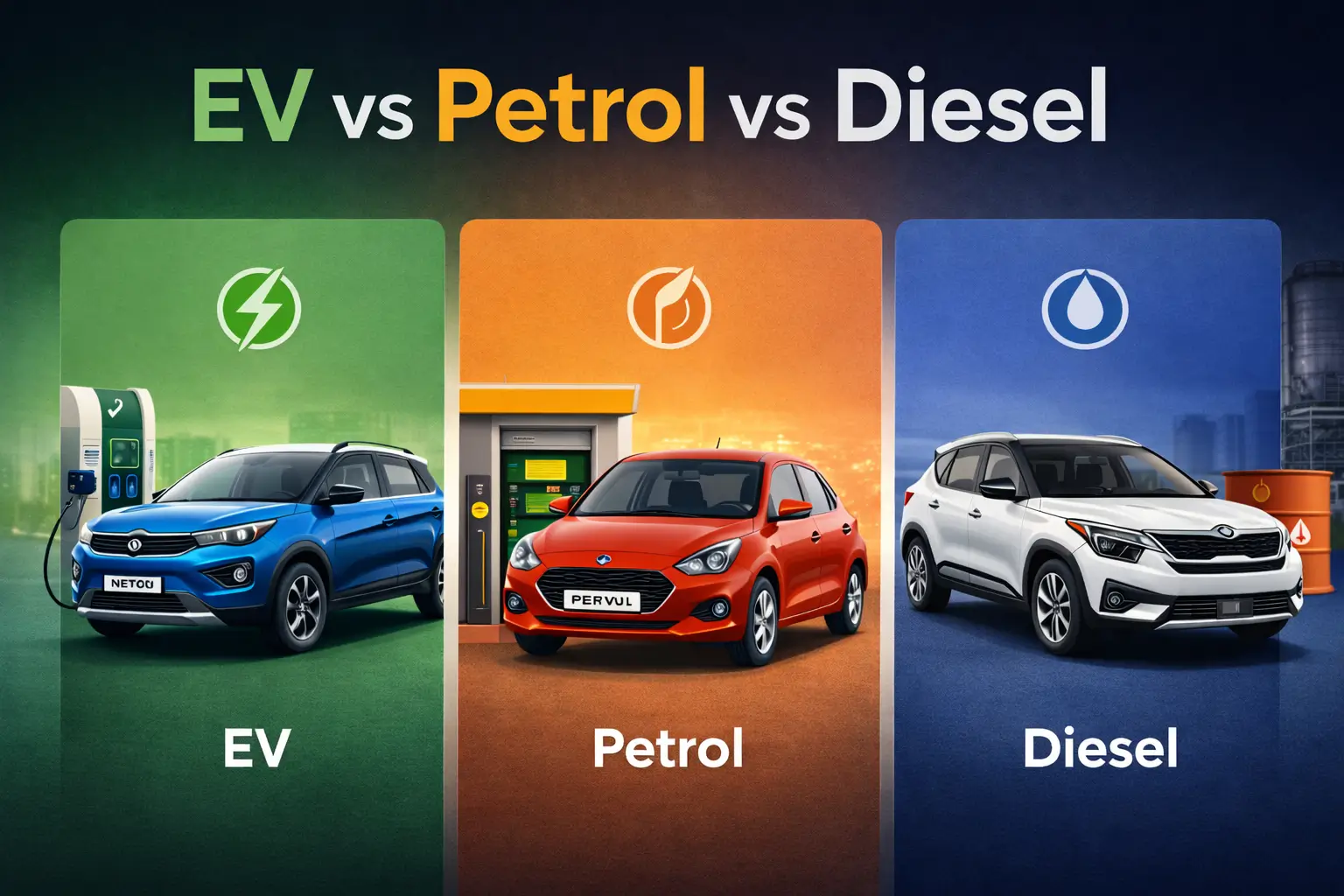
Detailed comparison of electric, petrol, and diesel cars for Indian roads and budgets
Choosing the right type of vehicle for Indian roads in 2026 is more complex than it used to be. Petrol, diesel, and electric vehicles (EVs) all have strong advantages — but also important trade-offs. The best choice depends on how you drive, where you drive, and what you value most: fuel cost, environmental impact, maintenance, or convenience.
This guide compares EVs, petrol cars, and diesel cars across practical factors that matter to Indian drivers.
1. Running Cost
Electric Vehicles (EVs)
EVs tend to have the lowest running cost. Charging at home or at fast chargers usually costs much less per kilometre than petrol or diesel. Many EV owners report half the energy cost compared to fuel, especially if home charging is used during off-peak hours.
Petrol Cars
Petrol cars are cheaper to buy than EVs and often cheaper than diesel in smaller engines. However, fuel cost per kilometre is higher than EV charging and can add up quickly with rising petrol prices.
Diesel Cars
Diesel engines generally deliver better mileage than petrol. This makes them cheaper per kilometre on highways and long trips. But recent fuel price parity between diesel and petrol has reduced this benefit.
2026 Verdict: EVs earn the lowest running cost in city driving. Diesel still holds an edge for long highway use, while petrol is balanced.
2. Purchase Price
EVs
EVs are generally more expensive to buy upfront than petrol or diesel cars, especially in the same size category. Government incentives (if available under state or central schemes) can reduce the effective cost, but EVs remain a premium choice.
Petrol Cars
Petrol cars usually come with the lowest starting prices, making them a strong choice for budget buyers. They are also available in the widest range of models.
Diesel Cars
Diesel cars typically cost more than petrol equivalents due to heavier engines and emission systems. Entry-level diesel options are fewer in 2026 compared to petrol.
2026 Verdict: Petrol leads in affordability, followed by diesel; EVs cost more upfront unless supported by subsidies.
3. Fuel / Energy Efficiency
EVs
Electric motors are highly efficient and convert more energy into motion. This gives EVs better real-world efficiency, especially in city traffic where regenerative braking recovers energy.
Petrol Cars
Modern petrol engines are efficient, especially in small capacities and with mild hybrids. However, internal combustion always loses energy as heat, limiting mileage.
Diesel Cars
Diesel engines are the most efficient of fuel engines and deliver the best mileage figures, particularly on highways.
2026 Verdict: EVs are most efficient in city traffic; diesel leads on long highway mileage among fuel cars.
4. Maintenance and Service
EVs
EV maintenance is simpler. There are no oil changes, no complex fuel systems, and fewer moving parts. Brake wear is often lower due to regenerative braking. Common costs are tyres, battery checks, and software updates.
Petrol Cars
Petrol cars require regular servicing: oil changes, spark plugs, filters, etc. Costs are moderate and spare parts are widely available.
Diesel Cars
Diesel engines need regular servicing similar to petrol, but certain components like fuel injectors and turbochargers may be more expensive to repair. Diesel particulate filters (DPFs) and emission systems can also add cost.
2026 Verdict: EVs have the lowest maintenance needs overall; petrol cars are easier and cheaper to service than diesel in many cases.
5. Environmental Impact
EVs
EVs produce zero tailpipe emissions, which drastically reduces local air pollution. Total environmental impact depends on how the electricity is generated. As India adds more renewable energy, EV impact improves further.
Petrol and Diesel Cars
Both fuel cars produce CO₂ and other emissions. Diesel tends to produce more nitrogen oxides (NOx), which are a concern in cities for air quality. Petrol emits less NOx but similar CO₂ per litre.
2026 Verdict: EVs are the best choice for reducing pollution, especially in urban areas.
Also read→
Best Car Insurance in India 2025: Plans, Coverage, Benefits
6. Practical Usability
EVs
Range anxiety and charging infrastructure are frequently mentioned challenges. However, in 2026, India’s fast charger network is growing, especially along highways and urban centres. Still, rural areas may have fewer charging points.
Petrol Cars
Fuel stations are available everywhere in India, making petrol cars highly convenient for long journeys and remote areas.
Diesel Cars
Diesel stations are nearly as widespread as petrol. Diesel cars are preferred for heavy loads and frequent long trips due to better highway mileage.
2026 Verdict: Petrol and diesel offer unmatched convenience currently; EV infrastructure is improving fast.
7. Resale Value
EVs
Resale value can vary significantly by model and battery condition. Well-established EV models often retain value better than lesser-known ones. Battery life and warranty also influence resale pricing.
Petrol Cars
Petrol cars generally have stable resale values due to wide demand and lower entry price points.
Diesel Cars
Resale values for diesel cars have softened somewhat due to shifts toward cleaner technologies, but long-distance commuters still value them.
2026 Verdict: Petrol cars hold resale value best overall; EV resale depends on battery health and brand.
8. Safety and Features
EVs
Many EV models come with a high level of built-in safety, digital interfaces, driver assist tech, and connected car features. Some also score high in crash ratings.
Petrol & Diesel Cars
Traditional fuel vehicles also offer features like ABS, airbags, and infotainment systems. Higher trims often match EV tech levels, though at an extra cost.
2026 Verdict: Feature availability depends more on variant and budget than fuel type.
9. Insurance and Running Cost
Insurance premiums tend to be higher for EVs due to replacement parts and battery risk. Petrol and diesel cars generally have lower initial insurance costs, but long-term fuel expenses can outweigh this.
2026 Verdict: EV running cost is low but insurance slightly higher; petrol and diesel are moderate to high on running costs over time.
Who Should Choose What in 2026?
Choose an EV if:
You drive mostly in the city
You want the lowest running cost and low pollution
A growing charging network covers your routes
You want modern features and digital connectivity
Choose a Petrol Car if:
You want a low purchase price
You drive in mixed urban and suburban conditions
You want widely available fuel and easy service
You prefer stable resale value
Choose a Diesel Car if:
You travel long distances frequently
You need high highway mileage
You often carry heavy loads
You want better fuel economy on long trips
Also read→
Top 10 Most Expensive SUVs 2025: Ultimate Luxury Performance
Final Words
There is no single “best” choice for everyone in India in 2026. Petrol, diesel, and electric options all have strong points.
EVs excel in running cost, pollution control, and low maintenance.
Petrol cars win on affordability and convenience.
Diesel cars still lead in highway efficiency and load-carrying capability.
Your choice should depend on how you use the car, how far you travel, and what matters most to you: cost savings, convenience, or lower emissions.
For more vehicle buying tips, fuel cost comparisons, and ownership advice, stay tuned to Parksmart.