Back
India Vehicle Scrappage Policy Explained Fitness Based Rules Guide
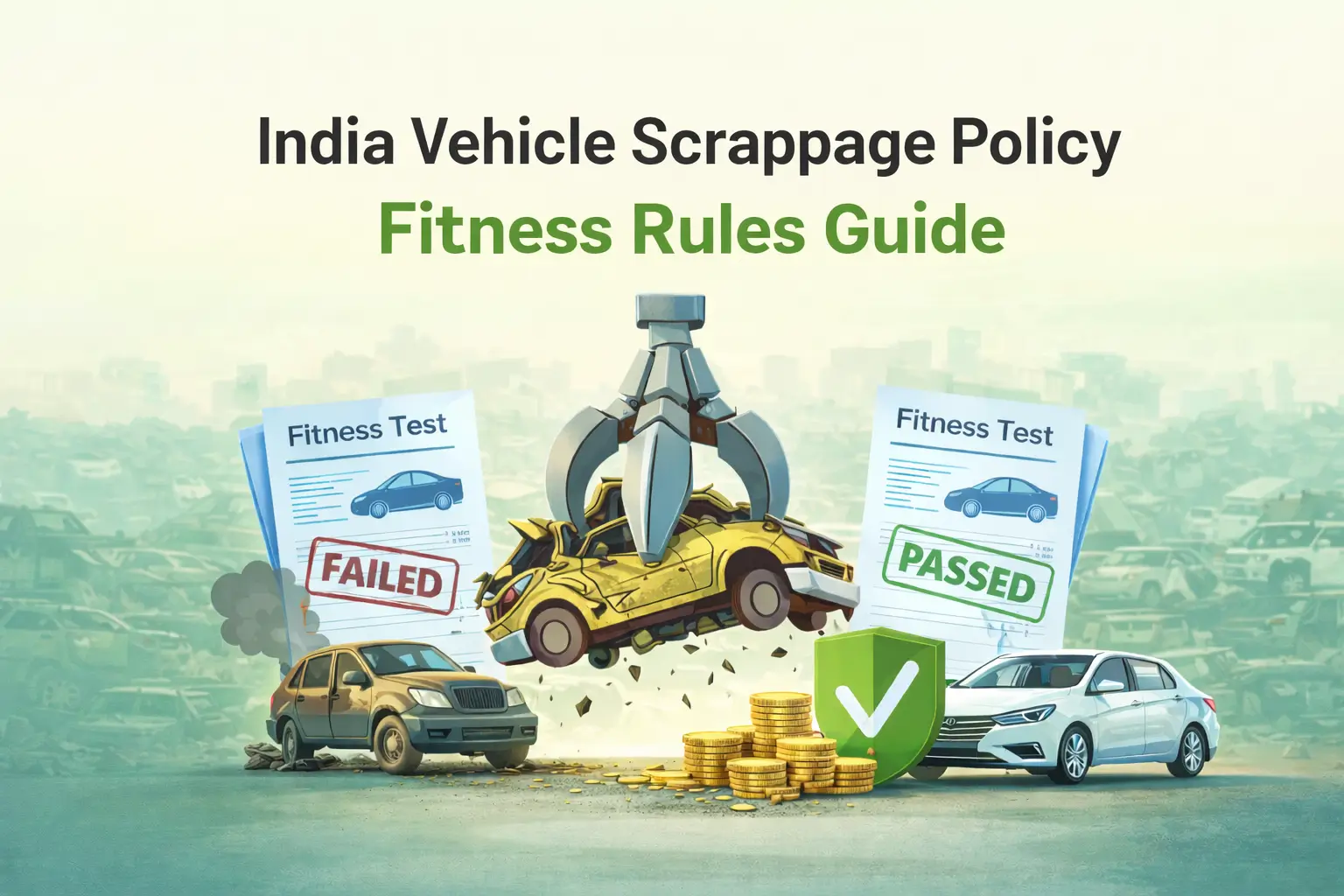
Understand fitness testing rules state enforcement and vehicle compliance
India’s vehicle scrappage policy is a major step toward cleaner roads, safer vehicles, and a more efficient transport system. While the policy is often discussed in terms of vehicle age, its real foundation lies in fitness and emissions compliance, not automatic removal based on years alone.
This article explains how the scrappage policy works, what role fitness testing plays, how states enforce it differently, and what vehicle owners should realistically expect.
What the Vehicle Scrappage Policy Is Really About
At a national level, India’s vehicle scrappage policy is fitness-based, not age-based. This distinction is important.
The policy focuses on identifying vehicles that are:
Structurally unsafe
Excessively polluting
No longer roadworthy
Only vehicles that fail mandatory fitness and emission tests are recommended for scrappage. Vehicle age acts as a trigger for testing, not an automatic disqualification.
This approach allows well-maintained vehicles to remain legally operational while ensuring that unsafe or highly polluting vehicles are removed from public roads.
Why the Policy Was Introduced
India has a large population of ageing vehicles, especially in urban areas. These vehicles contribute disproportionately to pollution and road safety risks.
The scrappage policy addresses four core issues:
Air quality deterioration caused by older engines
Rising fuel inefficiency in end-of-life vehicles
Higher accident risk due to worn mechanical components
Economic inefficiency occurs when old vehicles cost more to maintain than they contribute in value.
By encouraging systematic retirement of unfit vehicles, the policy balances environmental goals with practical ownership realities.
Also read→
Top 10 Most Expensive SUVs 2025: Ultimate Luxury Performance
Role of Fitness Testing and RVSFs
Fitness testing is conducted at authorised facilities, including Registered Vehicle Scrapping Facilities (RVSFs) and designated automated fitness centres.
Their role is limited but crucial:
Assess structural integrity, emissions, and safety parameters
Issue fitness or failure reports
Ensure traceable, tamper-proof testing.
Importantly, RVSFs do not decide policy enforcement. They only execute testing and scrapping once directed by the RTO.
Final authority for deregistration always lies with the Regional Transport Office, not the testing centre.
National Policy vs State-Level Enforcement
This is a key nuance often missed.
The scrappage policy is national in intent, issued under central guidelines.
Enforcement, incentives, and timelines vary by state.
States decide:
How frequently are fitness tests conducted
What incentives are offered for scrapping
Whether additional local restrictions apply
This means two identical vehicles in different states may face different compliance experiences, even under the same national framework.
How the Scrappage Process Works
When a vehicle fails fitness testing, the process generally follows these steps:
Fitness failure recorded in the national VAHAN database
RTO issues guidance for scrapping
The vehicle is taken to an authorised scrapping facility.
Scrapping is performed under regulated recycling norms.
A Certificate of De-registration is issued.
Vehicle registration is permanently removed from records.
Once deregistered, the vehicle cannot be sold, transferred, or re-registered.
Incentives Linked to Scrapping
To reduce resistance and encourage voluntary compliance, the policy includes incentives such as:
Road tax rebates on new vehicle purchase
Waiver or reduction of registration fees
Scrap value payout from authorised recyclers
Manufacturer discounts in some cases
These incentives are state-specific and may change over time.
Impact on Used Vehicle Buyers and Sellers
The scrappage policy has quietly reshaped the used-vehicle market:
Buyers are more cautious about vehicle age and fitness status
Sellers must price older vehicles realistically.
Fitness history now matters as much as ownership history.
For buyers, checking fitness validity before purchase has become essential to avoid near-term deregistration risks.
Common Misunderstandings Clarified
Myth: All vehicles older than 10–15 years must be scrapped
Reality: Only vehicles that fail fitness tests face scrappageMyth: Scrapping decisions are automatic
Reality: RTO approval and documented testing are mandatoryMyth: Policy is enforced uniformly nationwide
Reality: National framework, state-specific execution
Also read→
Best Car Insurance in India 2025: Plans, Coverage, Benefits
Conclusion
India’s vehicle scrappage policy is best understood as a fitness-based national framework with state-level enforcement flexibility. Its goal is not to penalise vehicle owners, but to remove unsafe and polluting vehicles from the road while allowing compliant ones to continue operating.
For vehicle owners, the key takeaway is simple: vehicle health now matters more than vehicle age. Staying informed, maintaining fitness compliance, and understanding your state’s rules can help you navigate the policy smoothly.
For clearer, practical guidance on vehicle rules, RTO processes, FASTag, and parking systems, continue exploring insights from Parksmart.