Back
New RC Smart Cards Guide for Vehicle Owners in India
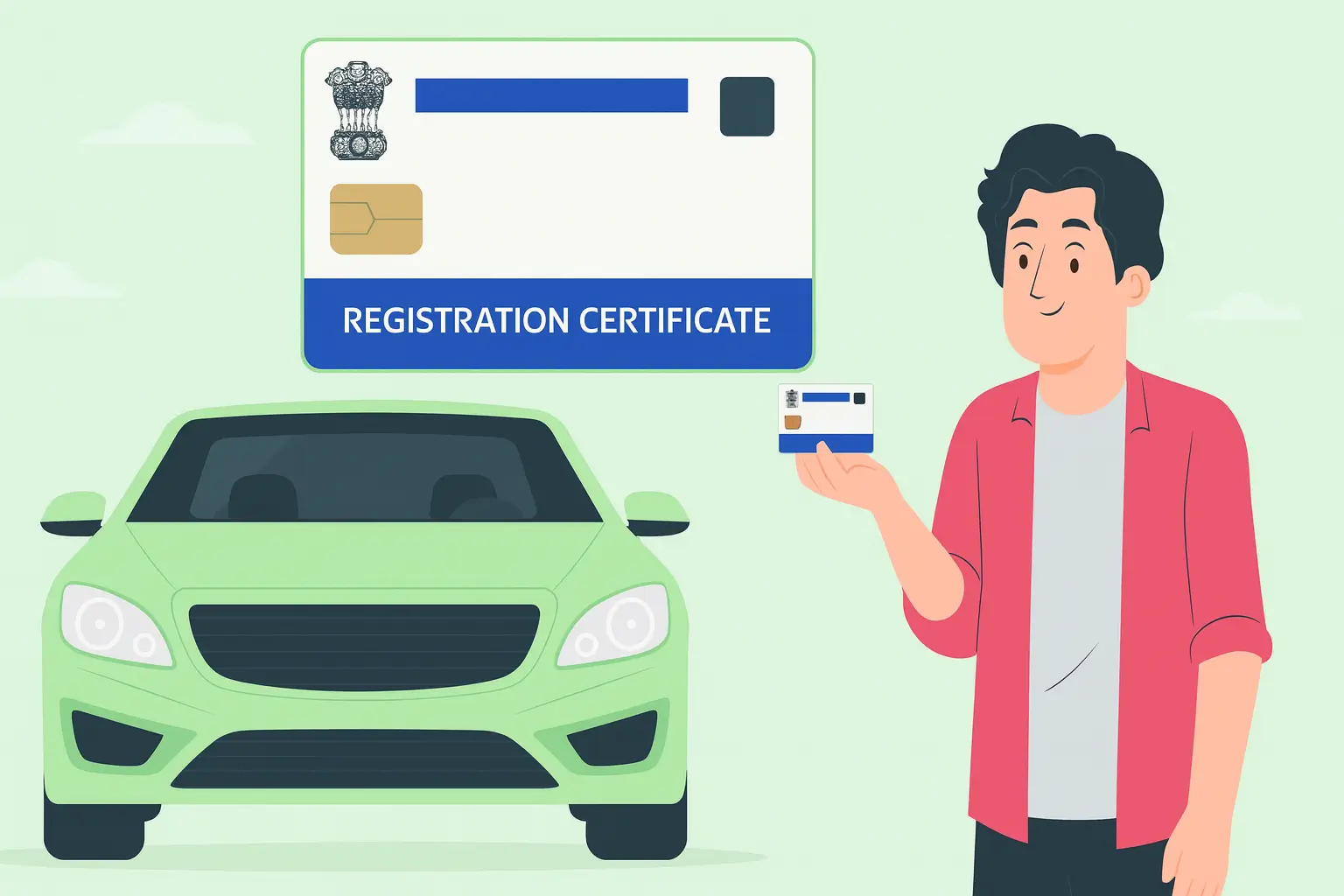
Complete guide explaining RC smart cards, benefits, process, and requirements for Indian vehicles.
Vehicle ownership in India has long been dependent on a single critical document: the Registration Certificate (RC). In 2025, the government will further strengthen this system by expanding the use of RC Smart Cards, a secure and digitally integrated version of the traditional registration document.
For many vehicle owners, this change is creating questions: What exactly is an RC Smart Card? Is it mandatory? How is it different from the old RC book? And do you need to apply again if you already have an RC?
This guide explains the complete picture in simple, practical terms.
What Is an RC Smart Card?
An RC Smart Card is a tamper-resistant plastic card that contains your vehicle’s registration details embedded in a secure microchip. It replaces the older paper RC book or laminated card and connects the vehicle owner’s data to India’s central transport database (VAHAN).
It acts as official proof that a vehicle is:
Registered with an Indian RTO
Legally owned by the person named on the card
Verified and traceable through the national vehicle database
Unlike older RC formats, the smart card is designed to be durable, digitally readable, and harder to forge.
Why RC Smart Cards Are Being Strengthened in 2025
The move towards RC Smart Cards in 2025 is not just about modern appearance. It is about tackling long-standing issues such as:
Fake or duplicate registration certificates
Difficulty in tracking stolen vehicles
Inaccurate ownership records during resale
Manual errors in old RTO systems
Poor integration with traffic and law enforcement networks
With increasing use of digital challan systems, FASTag, ANPR cameras, and centralised data platforms, the government is shifting to a fully connected mobility ecosystem. The RC Smart Card fits into that system as a secure, reliable identity of the vehicle.
What Information Does an RC Smart Card Store?
The RC Smart Card stores and displays essential data, including:
Registration number
Owner’s name
Vehicle type (car, bike, commercial, etc.)
Engine number and chassis number
Fuel type (petrol, diesel, electric, CNG, etc.)
Registration date and RTO details
Hypothecation status (loan/finance info, if applicable)
It may also hold encrypted data that can be accessed only by authorised traffic or RTO devices.
This allows officers and systems to verify the vehicle instantly without relying on paper records.
Who Needs to Get an RC Smart Card in 2025?
You may need an RC Smart Card if:
You are registering a new vehicle in 2025 or later
You are applying for an RC duplicate due to loss/damage
You are completing the ownership transfer of a vehicle
You are converting an old-style RC book into a smart format
You have shifted your vehicle to another state and require re-registration
Most new registrations already come with a smart card format issued by default in many states. However, older vehicles with book-style RCs can still be legally valid unless a specific upgrade is required for a process like transfer or re-registration.
Also read→
How to Check Vehicle Owner Details Online by Number Plate
How to Apply for RC Smart Card
The application for an RC Smart Card usually happens in two ways:
Through the dealer at the time of new vehicle purchase
Through the RTO / online Parivahan portal for conversions, corrections, or duplicates
Required documents may include:
Insurance certificate
Address proof
Identity proof
Form 20 / Form 26 / Form 29–30 (as applicable)
Old RC (if upgrading or correcting)
FIR copy (if the RC was lost)
The RTO verifies details and then issues the smart card after approval.
The physical card is normally delivered via Speed Post to the registered address.
RC Smart Card vs Digital RC (mParivahan)
Many people confuse Digital RC with Smart Card RC. They serve different roles.
RC Smart Card is the physical, official government-issued proof
Digital RC on the mParivahan app is the electronic version for on-road verification
Both are legally accepted, but the physical smart card remains essential for banking, resale, and interstate documentation requirements.
Ideally, a vehicle owner should keep both — the physical card and the digital copy — for safety and convenience.
What If Your RC Smart Card Has the Wrong Information?
Errors in name, address, fuel type, or engine number can cause serious legal and resale complications.
In the event of an error, you must apply for an RC correction at the RTO or through the Parivahan portal, accompanied by supporting documents. Driving with incorrect RC details can lead to:
Problems during resale
Insurance claim rejection
Legal issues during police verification
Delays in the loan or ownership transfer
Correction should always be done as early as possible.
Also read→
How to Check Vehicle Owner Details Online by Number Plate
Final Thoughts
RC Smart Cards are not just an update in design; they are a critical upgrade in how vehicle ownership is recorded and protected in India. With growing traffic surveillance, digital enforcement, and cross-state databases, having an accurate and verified RC in smart card format will become increasingly essential.
If you are buying, selling, or already own a vehicle, it is wise to check whether your RC is updated, accurate, and linked correctly to your mobile number in official records.