Back
Can Parking Cameras Read Number Plates at Night?
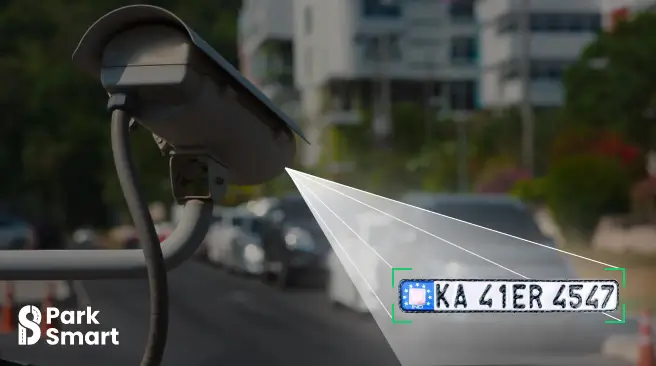
Learn how ANPR cameras capture number plates in darkness and how infrared lighting, glare, camera angle, and vehicle speed affect recognition.
Can a Parking Camera Read Your Number Plate at Night?
A car enters a parking area late at night. The road is dark, the headlights are on, and there is no security guard checking every vehicle manually. Can the parking camera still read the number plate?
Yes, a parking camera can read number plates at night, but the result depends on the type of camera, lighting, camera position and condition of the number plate. A normal CCTV camera may record the vehicle without capturing a clear plate. An ANPR camera is designed to capture and read number plates in different lighting conditions, including darkness.
This matters in parking areas where vehicles enter and leave throughout the day, such as shopping malls, office buildings, hospitals, hotels and residential societies.
How Does a Parking Camera Read a Number Plate at Night?
ANPR stands for Automatic Number Plate Recognition. It uses a camera and software to capture a vehicle's number plate and read the letters and numbers.
At night, the system needs enough light to capture a clear image of the plate. Many ANPR cameras use infrared (IR) illumination, which helps capture number plates in low-light conditions without relying only on visible light.
The process usually works like this:
A vehicle approaches the parking entry or exit.
The camera captures an image of its number plate.
The software identifies the plate and reads its characters.
The system checks the number against its records, where that feature is configured.
The parking system can record the entry or exit and trigger the connected barrier if the required access conditions are met.
The exact process depends on how the camera and parking software are configured.
What Helps a Camera Read Number Plates in the Dark?
1. Infrared Lighting
Infrared lighting helps the camera capture a readable number plate when the surrounding area has little or no visible light.
However, having infrared lighting alone does not guarantee a successful reading. The illumination must suit the capture distance, camera and type of number plate.
2. Headlights and Glare
Bright headlights can make number plates difficult to capture. The plate may appear too bright, or important characters may become unclear in the image.
A camera designed for number plate recognition uses suitable exposure settings and lighting to reduce these problems. Its position also matters.
3. Camera Angle and Distance
If a camera is mounted too high, too far away or at a sharp angle, the number plate may appear small or distorted.
The camera should face the plate as directly as the site layout allows. Its lens and capture distance should suit the speed at which vehicles approach the gate.
4. Vehicle Speed
A camera may capture a clear plate when a car moves slowly but struggle when the same car passes quickly.
The camera needs suitable shutter settings to reduce motion blur. Parking gates usually allow vehicles to approach at a controlled speed, which can make plate capture easier than capturing fast-moving road traffic.
5. Number Plate Condition
A dirty, damaged, bent or obscured number plate can affect recognition. Unusual plate placement and poor visibility can also make it harder for software to read the characters correctly.
Even a good ANPR camera cannot guarantee an accurate reading from every unclear image.
These factors are consistent with technical guidance on ANPR camera performance and number plate capture.
Can a Normal CCTV Camera Read Number Plates at Night?
Not always.
A normal CCTV camera is mainly used to monitor an area and record what happens. It may show that a car entered the parking area, but the number plate might be too dark, blurry or overexposed to read.
An ANPR camera is designed specifically to capture number plates. Its lens, lighting, exposure settings and recognition software are selected for that purpose.
For example, a mall may use CCTV cameras to monitor its parking lanes and an ANPR camera at the entry gate to record vehicle numbers.
The two systems serve different purposes. CCTV helps staff review events, while ANPR can identify readable number plates when the system is properly installed and configured.
Also read→
Types of Boom Barriers: Features, Uses and Applications
What Happens If the Camera Cannot Read a Number Plate?
A night-time reading can fail even when the camera is working.
Depending on the parking setup, the system may capture an image without identifying the full registration number. It may also record an incorrect character if the image is unclear.
Parking operators should have a process for handling these cases. This may include checking the captured image, verifying the number manually or using another approved access method.
For example, if a registered employee's vehicle is not recognised at night, security staff may need to verify the vehicle before allowing entry.
It is better to plan for occasional reading failures than to assume every vehicle will be recognised automatically.
How to Choose an ANPR Camera for Night-Time Parking
Before installing an ANPR camera, check these points:
Night-time performance: Confirm that the camera supports low-light operation and has suitable infrared illumination where needed.
Plate capture quality: Test whether the complete number plate remains readable in actual site conditions.
Headlight handling: Check the image when vehicles approach with headlights on.
Camera placement: Make sure the angle, height and distance suit the entry or exit lane.
Vehicle speed: Test the camera with vehicles moving at the speed expected at the gate.
Software integration: Confirm that the camera can connect with the parking software and access control system you plan to use.
Night-time testing: Test after dark, not just during daylight. Include different vehicle types and lighting conditions.
A demonstration during the day is not enough to confirm that a system will work reliably at night.
FAQs
Can ANPR cameras work in complete darkness?
Yes, cameras with suitable infrared illumination can capture number plates in very dark conditions. The actual result depends on the camera, distance, installation and plate visibility.
Do parking cameras need streetlights to read number plates?
Not necessarily. A suitable ANPR camera may use infrared lighting, so streetlights are not always required. Additional lighting may still be useful in some installations.
Can a parking camera read a number plate through a tinted windshield?
The number plate is normally mounted outside the vehicle, so windshield tint is not usually the main issue. Glare, camera angle, distance and plate visibility matter more.
Is ANPR better than normal CCTV for parking entry and exit?
For automatic number plate reading, an ANPR camera is generally the more suitable choice. CCTV remains useful for general monitoring and reviewing incidents.
Also read→
Boom Barriers: Types, Features, Prices, and Applications
Conclusion
A parking camera can read number plates at night when it has suitable low-light capability, proper illumination and the right installation. But darkness, headlight glare, motion blur and unclear plates can still affect the result.
For businesses managing vehicle entry and exit after dark, choosing an ANPR camera should involve real night-time testing, not just checking the camera's specifications.
ParkSmart helps businesses manage vehicle access with parking technology designed around their site requirements. The right camera and system setup can make vehicle entry and exit easier to track, day and night.

Automated Gate Access & Parking Revenue Optimization
Eliminate manual errors and stop revenue leakage with automated RFID boom barriers, live occupancy tracking, and multi-mode POS payment processing for commercial properties.
144,200
+
Cars Managed by ParkSmart
110,100
+
Transactions Processed Daily
2,900
+
Parking Locations Integrated
299,100
+
Satisified Users
Increase Efficiency, Maximize Profit
Eliminate manual errors and stop revenue leakage with automated RFID boom barriers, live occupancy tracking, and multi-mode POS payment processing for commercial properties.
144,200
+
Cars Managed by ParkSmart
110,100
+
Transactions Processed Daily
2,900
+
Parking Locations Integrated
299,100
+
Satisified Users
Automated Gate Access & Parking Revenue Optimization
Eliminate manual errors and stop revenue leakage with automated RFID boom barriers, live occupancy tracking, and multi-mode POS payment processing for commercial properties.
144,200
+
Cars Managed by ParkSmart
110,100
+
Transactions Processed Daily
2,900
+
Parking Locations Integrated
299,100
+
Satisified Users
