Back
RC Transfer Process Online Guide India 2026 with Documents
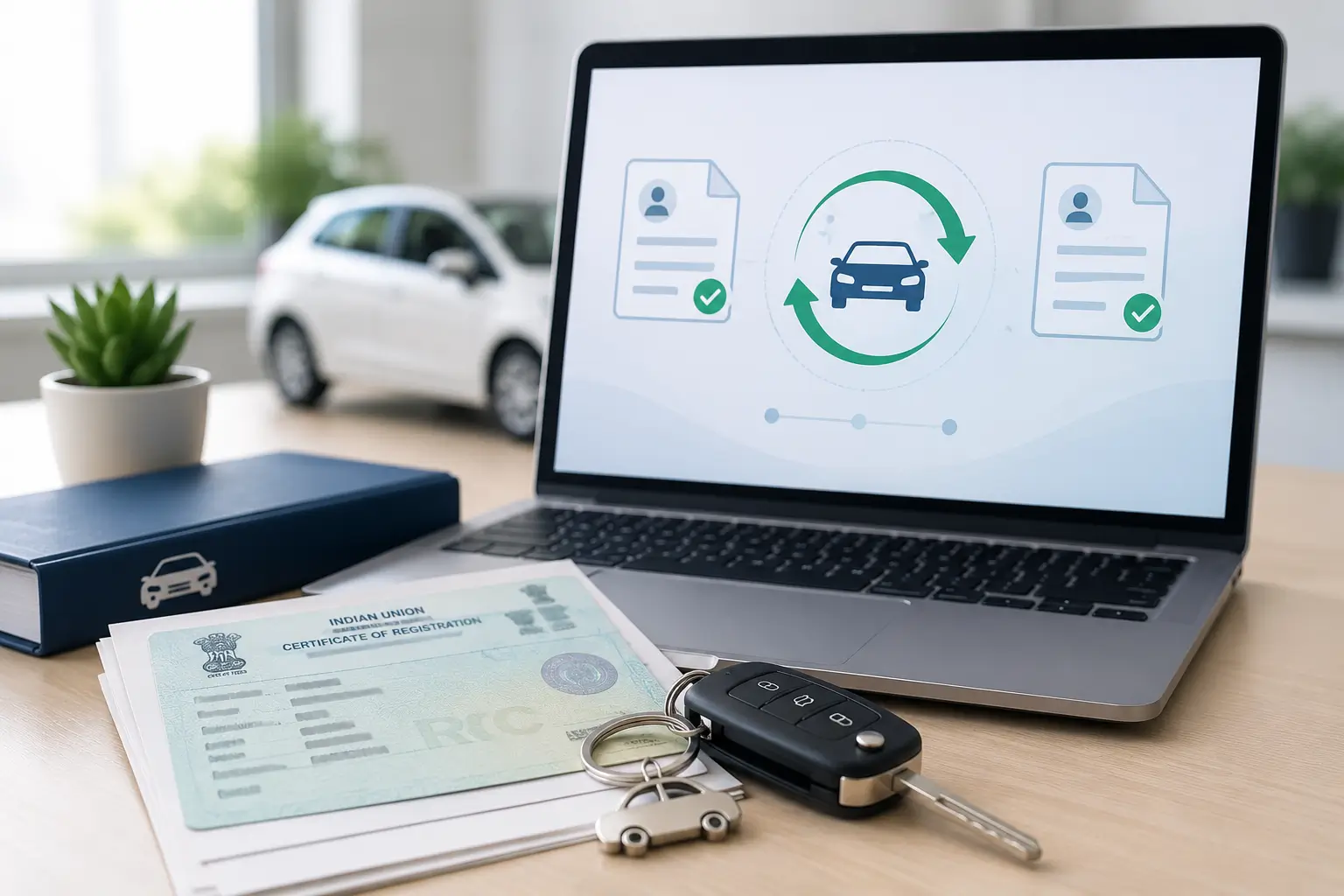
Complete RC ownership transfer process, fees, documents, timeline, and RTO verification explained.
RC transfer is a mandatory process when a vehicle is sold or ownership changes. Without completing it, the vehicle legally remains in the name of the previous owner, which can create issues like challans, insurance disputes, and liability problems.
Most guides only explain basic steps.
What they miss: timelines, rejection reasons, and real-world RTO dependency issues.
This guide explains the RC transfer process online in India (2026) in a simple, updated, and practical way.
Quick Answer
RC transfer is done through the Parivahan portal where buyer and seller submit ownership transfer application, required documents, and fees. After verification by RTO, a new RC is issued in the buyer’s name.
Step Summary (Fast Overview)
Visit Parivahan portal
Fill ownership transfer application (Form 29 & 30)
Upload required documents
Pay applicable fees
Submit the application for RTO verification
Receive updated RC after approval
Why RC Transfer Is Mandatory
RC transfer is not optional under Indian law.
If Not Done
Seller remains legally responsible for challans
Insurance claims may get rejected
The buyer cannot prove legal ownership
Resale becomes difficult
In many cases, legal liability continues until RC is officially updated.
RC Transfer Process Online
Step 1: Visit Official Portal
Go to the Parivahan vehicle services portal under your state section.
Step 2: Select Ownership Transfer
Choose “Transfer of Ownership” under vehicle-related services.
Step 3: Enter Vehicle Details
Registration number
Chassis number (last 5 digits)
Mobile number verification
Step 4: Fill Application Form
Submit required details for both buyer and seller.
Key forms used:
Form 29
Form 30
Step 5: Upload Documents
RC copy
Insurance certificate
PUC certificate
ID and address proof
Sale agreement (if required)
Step 6: Pay Fees
Pay online via UPI, card, or net banking.
Step 7: RTO Verification
Application is verified by RTO. In some cases, physical submission or inspection may be required depending on state rules.
Step 8: RC Issued
After approval, updated RC is issued in buyer’s name.
Timeline for RC Transfer
Basic cases: 7–15 days
Complex cases: 15–30 days
Inter-state transfer: may take longer due to NOC process
Delays often happen due to document mismatch or RTO verification backlog.
Documents Required
Original RC
Form 29 & Form 30
Insurance copy
PUC certificate
Address proof
Identity proof
NOC (for inter-state transfer)
Inter-State RC Transfer
If vehicle is moved to another state:
NOC from original RTO is required
New state registration process may apply
Additional verification may be needed
This step is often missed in basic guides.
Common Problems in RC Transfer
1. Application Rejection
Due to incorrect documents or mismatch in details.
2. Delay in Approval
RTO verification backlog or manual checks.
3. Missing NOC
Inter-state transfers fail without proper clearance.
4. Status Not Updating
Online portal may show delay even after processing.
Example Case (Real Situation)
A buyer completes payment and submits RC transfer online but does not follow up at RTO. The application stays pending for weeks due to missing physical verification.
After submitting corrected documents, the transfer gets approved within days.
Benefits of Completing RC Transfer
Legal ownership protection
No liability on seller
Smooth insurance claims
Easy resale in future
Clean vehicle history
Quick Tips
Always verify documents before submission
Complete transfer within 14 days of purchase
Track application status regularly
Ensure seller cooperation for faster processing
FAQs
Can RC transfer be done fully online?
Partially yes, but some cases still require RTO verification or physical submission.
How long does RC transfer take in India?
Usually 7–30 days depending on state and case complexity.
Is RC transfer mandatory after buying a used vehicle?
Yes, it is legally required under the Motor Vehicles Act.
Also read→
Why Every Residential Society Needs a Boom Barrier for Security Today
Conclusion
RC transfer is a critical legal process that should be completed immediately after vehicle purchase. While the online system has simplified the process, delays and verification steps still depend on RTO procedures.
Understanding each step properly helps avoid rejection, delays, and legal issues.