Back
RFID Parking System Guide for Smart Vehicle Entry
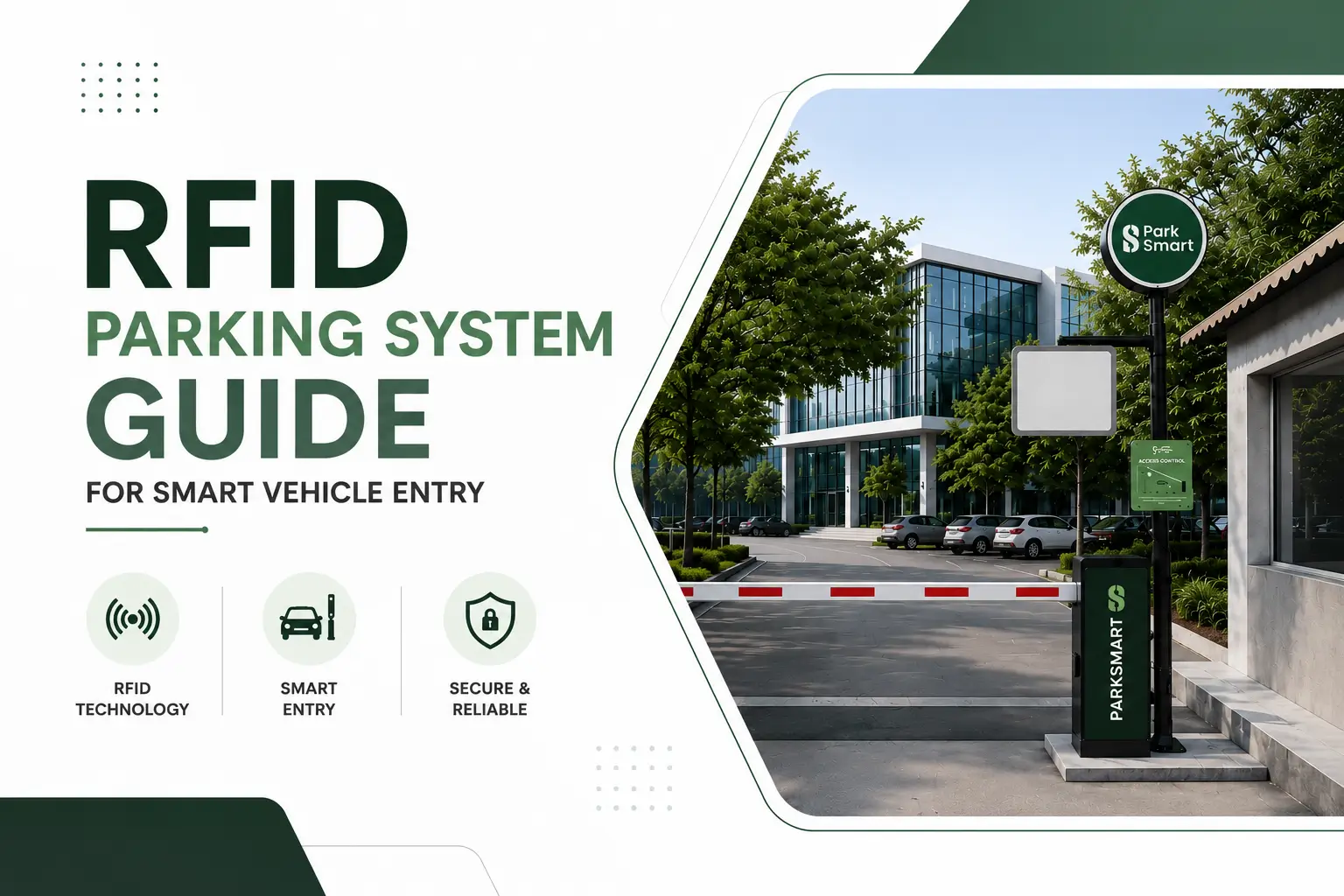
Complete RFID parking system guide covering working, pricing, benefits, and smart vehicle access management in India for apartments, offices, and commercial parking spaces.
Parking entry becomes frustrating when every vehicle has to stop for manual checking. In offices, apartments, malls, and commercial buildings, this usually creates long queues, unnecessary delays, and security issues.
That is why RFID parking systems are becoming common across modern parking setups in India.
Instead of depending on security guards and registers, RFID technology allows vehicles to enter automatically within seconds. The process feels smoother, faster, and more organized for both property managers and vehicle owners.
This guide explains how RFID parking systems work, their benefits, pricing, and why many businesses are shifting toward smart parking automation in 2026.
What is an RFID Parking System?
RFID stands for Radio Frequency Identification.
In simple words, it is a technology that identifies vehicles automatically using RFID tags and scanners.
Every approved vehicle receives an RFID tag linked to its details. When the vehicle approaches the gate, the RFID reader scans the tag instantly.
If the vehicle is authorized, the boom barrier opens automatically.
The driver does not need to stop for manual verification every time.
How RFID Parking Systems Work
RFID Tag is Assigned
Each vehicle receives a unique RFID tag connected to:
Vehicle number
Employee or resident details
Access permissions
The tag is usually attached to the windshield.
Vehicle Reaches the Gate
As the vehicle approaches the entry point, the RFID reader detects the tag automatically.
System Verification Happens
The parking software checks whether the vehicle has approved access.
Barrier Opens Automatically
If access is valid, the boom barrier opens within seconds.
The entire process is fast and smooth compared to manual checking.
Why RFID Parking Systems Are Becoming Popular
Faster Entry During Busy Hours
Morning office traffic and residential rush hours often create vehicle queues.
RFID systems reduce waiting time because vehicles no longer require manual verification.
Better Parking Security
Only approved vehicles can enter the premises.
This helps reduce unauthorized parking and improves overall security.
Less Manual Work
Security teams spend less time maintaining registers and checking vehicle details manually.
The system stores records automatically.
Cleaner Parking Operations
Parking movement becomes more organized because entry and exit are digitally managed.
This improves the overall parking experience.
Where RFID Parking Systems Are Commonly Used
RFID parking technology is widely used in:
Residential societies
Corporate offices
Commercial buildings
Hospitals
Warehouses
Smart parking facilities
Many modern office campuses now prefer RFID systems because they handle daily traffic more efficiently.
RFID Parking System Price in India (2026)
The final cost depends on:
Number of vehicles
Number of gates
RFID reader quality
Boom barrier type
Software integration
Approximate Price Range
System Type | Approximate Cost |
Basic RFID Parking Setup | ₹1,00,000 – ₹2,00,000 |
Office Parking RFID System | ₹2,00,000 – ₹5,00,000 |
Advanced Smart Parking Solution | ₹5,00,000+ |
Note: Prices are approximate 2026 estimates and may vary depending on customization and project requirements.
Common Mistakes Buyers Make
Choosing Cheap Hardware
Low-quality RFID readers may fail under heavy traffic conditions.
Ignoring Software Quality
Parking software is equally important for smooth tracking and reporting.
No Planning for Future Traffic
Some systems work initially but struggle when vehicle numbers increase later.
Quick Things to Check Before Installation
RFID reader range and speed
Boom barrier quality
Software support
Spare parts availability
Future scalability
Also read→
ANPR Parking System Guide for Smart Vehicle Access
FAQs
Is RFID parking better than manual parking entry?
Yes. RFID systems are faster, more secure, and easier to manage compared to manual vehicle checking.
Can RFID parking reduce traffic at entry gates?
Yes. Vehicles enter more quickly because the system verifies them automatically.
Are RFID parking systems safe?
Yes. Only approved vehicles receive access, which improves parking security.
Can RFID systems work in apartments?
Yes. RFID parking systems are widely used in residential societies for resident and visitor vehicle management.
Does RFID parking require internet?
Not always. Many systems can work locally, though internet improves monitoring and cloud access.
Conclusion
RFID parking systems are changing the way parking areas operate in offices, apartments, and commercial buildings. They help reduce delays, improve security, and create smoother vehicle movement without depending heavily on manual checking.
As parking traffic continues increasing across cities, smart parking automation is becoming more practical for managing modern vehicle access efficiently.