Back
Can a Traffic Challan Be Issued Without Stopping the Vehicle?
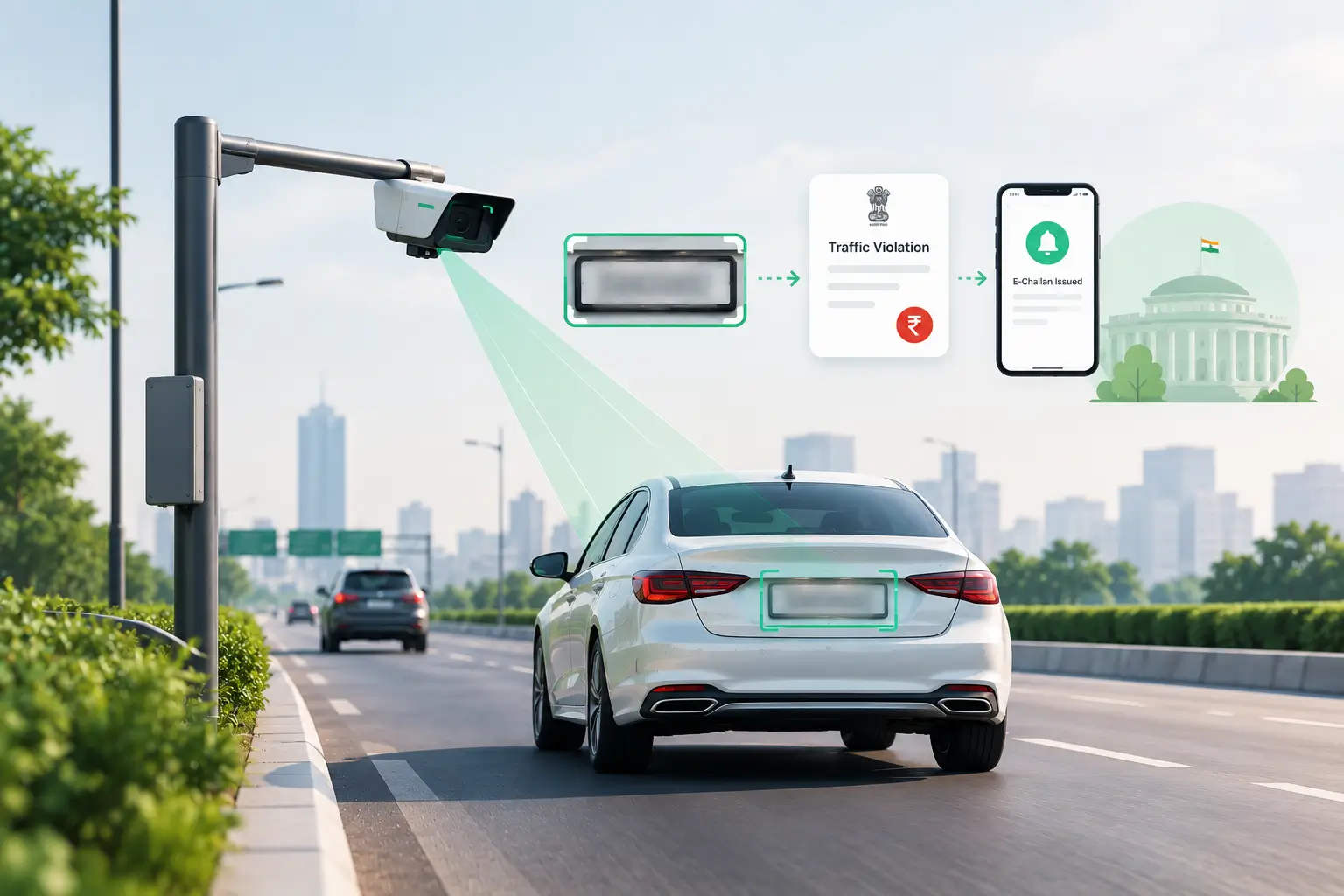
Learn how traffic cameras record violations and how an e-challan can be issued without a police stop.
Can a Traffic Challan Be Issued Without Stopping the Vehicle?
Yes, a traffic challan can be issued even if a traffic police officer does not stop your vehicle.
In India, certain traffic violations can be recorded using electronic enforcement devices. These may include speed cameras, CCTV cameras used for enforcement, speed guns and Automatic Number Plate Recognition (ANPR) systems. Authorities can use the recorded details to issue an e-challan under the applicable rules. (MoRTH)
This means you may receive a challan even if you continued driving and never spoke to a police officer.
How Can a Challan Be Issued Without Stopping the Car?
An electronic enforcement system can record a vehicle when it detects a possible traffic violation.
Depending on the system, it may capture the vehicle number, the time and place of the incident, and a photograph or other electronic evidence. The information can then be processed through the traffic enforcement system.traffic enforcement system can then process the information
The Ministry of Road Transport and Highways describes how systems such as CCTV and ANPR can record violations and connect the information with the eChallan system. (MoRTH Annual Report)
So, a police officer does not always need to stop the vehicle before a challan is issued.
Which Traffic Violations May Be Recorded Electronically?
The electronic enforcement rules list several offences for which footage from an electronic enforcement device can be used. Examples include:
Driving above the prescribed speed limit
Stopping or parking in an unauthorised place
Not following required safety measures for drivers or pillion riders
Riding without a protective helmet
Jumping a red light
Using a handheld communication device while driving
Driving against the authorised flow of traffic
Not wearing a seat belt
Certain lane-driving and registration-plate violations
These are examples from the rules, not a guarantee that every camera can detect every offence. The device must be used for the relevant enforcement purpose, and the applicable rules still matter. (MoRTH electronic monitoring rules)
How Does the System Identify the Vehicle?
The vehicle registration number helps identify the vehicle involved.
An enforcement system may capture the number plate along with details of the incident. The eChallan system can use vehicle records to retrieve the registered owner's details and process the notice. (MoRTH Annual Report)
If the number plate is unclear or the vehicle has been identified incorrectly, check the evidence and challan details before deciding what to do next.
What If Someone Else Was Driving the Car?
A challan linked to a vehicle does not automatically prove that its registered owner was driving at the time.
If another person was driving, check the challan and follow the process provided by the authority handling it. You may need to provide relevant information or evidence. The steps can depend on the type of challan and the authority involved.
Can a CCTV Camera Issue a Challan by Itself?
Camera footage can be used in traffic enforcement, but not every ordinary CCTV camera automatically generates a challan.
The electronic monitoring rules define the devices and circumstances covered by the enforcement process. Some systems can detect or record violations and send the information to the eChallan system. Other cameras may simply record footage without being connected to that process. (MoRTH electronic monitoring rules)
Whether a particular recording can support a challan depends on the system, the evidence and the applicable rules.
How Can You Check If Your Vehicle Has an E-Challan?
You can check challan details through the official Government eChallan portal.
Open the official eChallan website.
Choose the option to check challan status.
Enter the requested vehicle or challan details.
Review the offence, date, location and payment status shown.
Use the official website rather than unfamiliar links sent in messages. The portal warns users about fraudulent websites and apps that pretend to be eChallan services. (Official eChallan portal)
What Should You Do If You Think the Challan Is Wrong?
Check the details first. Look at the vehicle number, date, location, offence and any evidence available.
If you believe the challan was issued incorrectly, use the grievance or dispute option provided by the relevant traffic authority. The official eChallan portal has a Raise Grievance facility for supported challans. Some cases may need to be handled through a state or city traffic police portal instead. (eChallan grievance service)
Keep any relevant proof, such as photographs, vehicle records or information showing where the vehicle was at the time.
There is no need to assume that every dispute follows the same procedure or will have the same result. Follow the instructions given by the authority handling your challan.
Does a Traffic Police Officer Have to Be Present?
No, not in every case.
Certain violations can be recorded through electronic enforcement devices without an officer physically stopping the vehicle. The recorded information may then be used to issue a challan according to the applicable rules.
However, electronic enforcement does not mean that every camera on every road is authorised or configured to issue challans.
Also read→
Check and Pay Car Challan Online in India Fast Easily
Final Takeaway
A traffic challan can be issued without stopping the vehicle. Certain violations may be recorded through electronic enforcement devices, and the evidence can be used to issue an e-challan.
If you receive a challan unexpectedly, check the vehicle details, offence, date and location through the official portal. If you believe it is incorrect, follow the grievance process provided by the relevant authority.
FAQs
Can I get a traffic challan without being stopped by police?
Yes. Certain traffic violations can be recorded electronically, so a police officer does not always need to stop the vehicle.
Can every CCTV camera issue a traffic challan?
No. Footage from cameras used in an applicable enforcement system may support a challan, but an ordinary CCTV camera does not automatically generate one.
Which violations may be recorded by electronic devices?
Examples listed in the rules include speeding, red-light violations, certain parking offences, helmet and seat-belt violations, and some other specified offences. The device and applicable rules determine what can be enforced.
Where can I check my e-challan?
Use the official eChallan portal to check the details and status of a challan.
What if I believe the challan is incorrect?
Check the evidence and follow the grievance or dispute process provided by the authority responsible for the challan. The process may vary depending on the case and location.
Can a Traffic Challan Be Issued Without Stopping the Vehicle?
Yes, a traffic challan can be issued even if a traffic police officer does not stop your vehicle.
In India, certain traffic violations can be recorded using electronic enforcement devices. These may include speed cameras, CCTV cameras used for enforcement, speed guns and Automatic Number Plate Recognition (ANPR) systems. Authorities can use the recorded details to issue an e-challan under the applicable rules. (MoRTH)
This means you may receive a challan even if you continued driving and never spoke to a police officer.
How Can a Challan Be Issued Without Stopping the Car?
An electronic enforcement system can record a vehicle when it detects a possible traffic violation.
Depending on the system, it may capture the vehicle number, the time and place of the incident, and a photograph or other electronic evidence. The information can then be processed through the traffic enforcement system.traffic enforcement system can then process the information
The Ministry of Road Transport and Highways describes how systems such as CCTV and ANPR can record violations and connect the information with the eChallan system. (MoRTH Annual Report)
So, a police officer does not always need to stop the vehicle before a challan is issued.
Which Traffic Violations May Be Recorded Electronically?
The electronic enforcement rules list several offences for which footage from an electronic enforcement device can be used. Examples include:
Driving above the prescribed speed limit
Stopping or parking in an unauthorised place
Not following required safety measures for drivers or pillion riders
Riding without a protective helmet
Jumping a red light
Using a handheld communication device while driving
Driving against the authorised flow of traffic
Not wearing a seat belt
Certain lane-driving and registration-plate violations
These are examples from the rules, not a guarantee that every camera can detect every offence. The device must be used for the relevant enforcement purpose, and the applicable rules still matter. (MoRTH electronic monitoring rules)
How Does the System Identify the Vehicle?
The vehicle registration number helps identify the vehicle involved.
An enforcement system may capture the number plate along with details of the incident. The eChallan system can use vehicle records to retrieve the registered owner's details and process the notice. (MoRTH Annual Report)
If the number plate is unclear or the vehicle has been identified incorrectly, check the evidence and challan details before deciding what to do next.
What If Someone Else Was Driving the Car?
A challan linked to a vehicle does not automatically prove that its registered owner was driving at the time.
If another person was driving, check the challan and follow the process provided by the authority handling it. You may need to provide relevant information or evidence. The steps can depend on the type of challan and the authority involved.
Can a CCTV Camera Issue a Challan by Itself?
Camera footage can be used in traffic enforcement, but not every ordinary CCTV camera automatically generates a challan.
The electronic monitoring rules define the devices and circumstances covered by the enforcement process. Some systems can detect or record violations and send the information to the eChallan system. Other cameras may simply record footage without being connected to that process. (MoRTH electronic monitoring rules)
Whether a particular recording can support a challan depends on the system, the evidence and the applicable rules.
How Can You Check If Your Vehicle Has an E-Challan?
You can check challan details through the official Government eChallan portal.
Open the official eChallan website.
Choose the option to check challan status.
Enter the requested vehicle or challan details.
Review the offence, date, location and payment status shown.
Use the official website rather than unfamiliar links sent in messages. The portal warns users about fraudulent websites and apps that pretend to be eChallan services. (Official eChallan portal)
What Should You Do If You Think the Challan Is Wrong?
Check the details first. Look at the vehicle number, date, location, offence and any evidence available.
If you believe the challan was issued incorrectly, use the grievance or dispute option provided by the relevant traffic authority. The official eChallan portal has a Raise Grievance facility for supported challans. Some cases may need to be handled through a state or city traffic police portal instead. (eChallan grievance service)
Keep any relevant proof, such as photographs, vehicle records or information showing where the vehicle was at the time.
There is no need to assume that every dispute follows the same procedure or will have the same result. Follow the instructions given by the authority handling your challan.
Does a Traffic Police Officer Have to Be Present?
No, not in every case.
Certain violations can be recorded through electronic enforcement devices without an officer physically stopping the vehicle. The recorded information may then be used to issue a challan according to the applicable rules.
However, electronic enforcement does not mean that every camera on every road is authorised or configured to issue challans.
Also read→
Check and Pay Car Challan Online in India Fast Easily
Final Takeaway
A traffic challan can be issued without stopping the vehicle. Certain violations may be recorded through electronic enforcement devices, and the evidence can be used to issue an e-challan.
If you receive a challan unexpectedly, check the vehicle details, offence, date and location through the official portal. If you believe it is incorrect, follow the grievance process provided by the relevant authority.
FAQs
Can I get a traffic challan without being stopped by police?
Yes. Certain traffic violations can be recorded electronically, so a police officer does not always need to stop the vehicle.
Can every CCTV camera issue a traffic challan?
No. Footage from cameras used in an applicable enforcement system may support a challan, but an ordinary CCTV camera does not automatically generate one.
Which violations may be recorded by electronic devices?
Examples listed in the rules include speeding, red-light violations, certain parking offences, helmet and seat-belt violations, and some other specified offences. The device and applicable rules determine what can be enforced.
Where can I check my e-challan?
Use the official eChallan portal to check the details and status of a challan.
What if I believe the challan is incorrect?
Check the evidence and follow the grievance or dispute process provided by the authority responsible for the challan. The process may vary depending on the case and location.

Automated Gate Access & Parking Revenue Optimization
Eliminate manual errors and stop revenue leakage with automated RFID boom barriers, live occupancy tracking, and multi-mode POS payment processing for commercial properties.
144,200
+
Cars Managed by ParkSmart
110,100
+
Transactions Processed Daily
2,900
+
Parking Locations Integrated
299,100
+
Satisified Users
Increase Efficiency, Maximize Profit
Eliminate manual errors and stop revenue leakage with automated RFID boom barriers, live occupancy tracking, and multi-mode POS payment processing for commercial properties.
144,200
+
Cars Managed by ParkSmart
110,100
+
Transactions Processed Daily
2,900
+
Parking Locations Integrated
299,100
+
Satisified Users
Automated Gate Access & Parking Revenue Optimization
Eliminate manual errors and stop revenue leakage with automated RFID boom barriers, live occupancy tracking, and multi-mode POS payment processing for commercial properties.
144,200
+
Cars Managed by ParkSmart
110,100
+
Transactions Processed Daily
2,900
+
Parking Locations Integrated
299,100
+
Satisified Users
