Back
How RFID Technology Works Today and Why It Matters
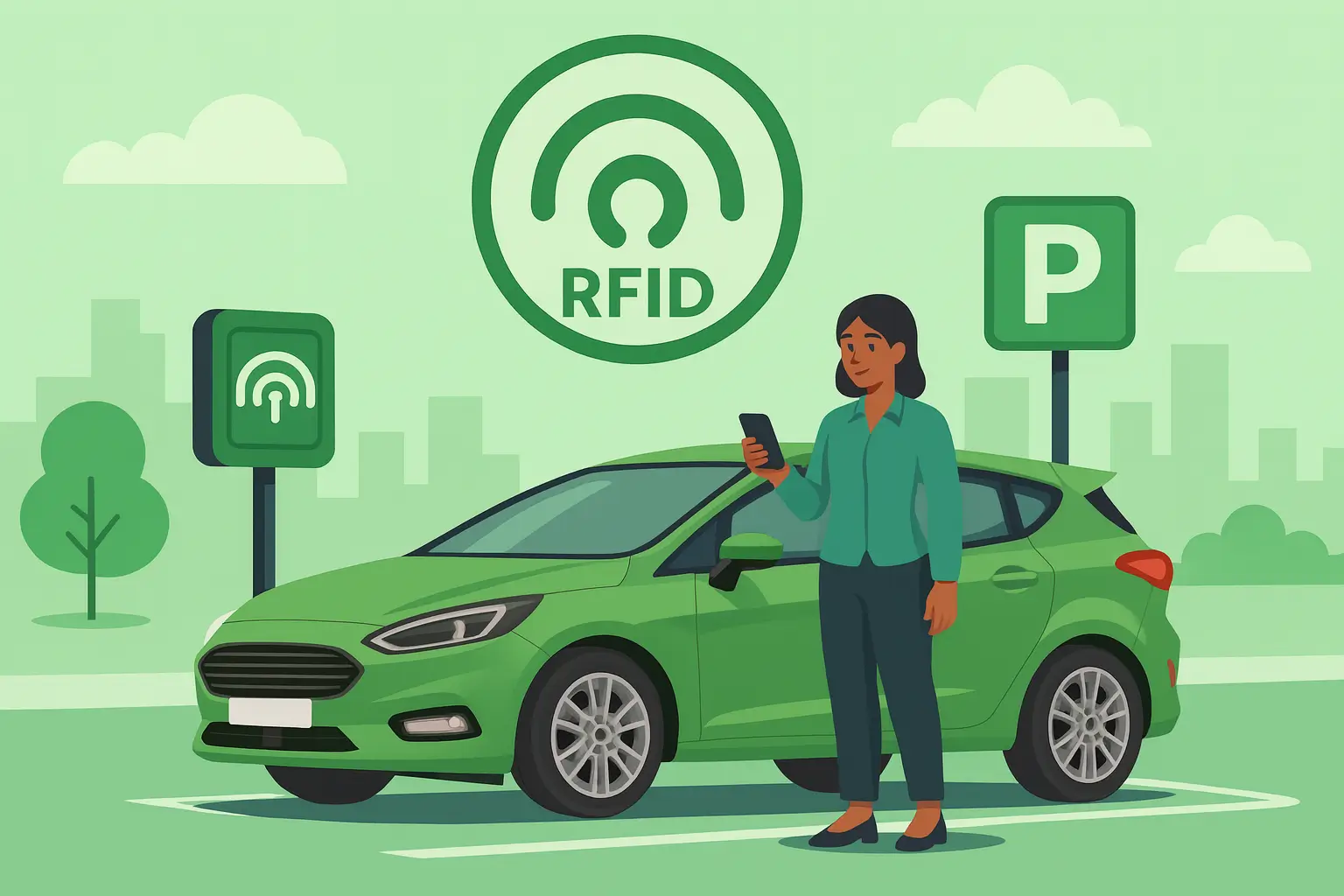
Understanding RFID tags, readers, signals, and real-time tracking applications across industries.
RFID
Discover how modern RFID systems are reshaping industries with real-time visibility, accuracy, and smarter automation.
In today’s rapidly evolving tech landscape, few innovations have had as wide an impact as Radio Frequency Identification (RFID). From warehouses and hospitals to modern parking systems and retail shelves, RFID has become the silent engine powering speed, accuracy, and seamless movement of goods and people. As businesses enter 2025, understanding how RFID works and why it is becoming increasingly essential is more important than ever.
This guide breaks down RFID technology in simple terms, explains how it works, and explores how different industries are using it to operate more efficiently.
What Is RFID Technology?
RFID (Radio Frequency Identification) is a wireless technology that identifies and tracks objects using radio waves. At its core, an RFID system includes three parts:
RFID Tag – A small chip that stores data and attaches to any object.
RFID Reader – Captures information from the tag using radio signals.
Antenna – Helps transmit signals between the reader and the tag.
Unlike barcodes, RFID does not require physical scanning or a line of sight. A reader can detect multiple tags instantly, even if the objects are stacked, hidden, or moving.
How RFID Technology Works
RFID works through continuous communication between a tag and a reader. The process is simple but highly effective.
1. Reader Sends a Signal
The RFID reader emits a radio frequency signal. Passive RFID tags draw power from this signal, while active tags use their built-in battery.
2. Tag Responds
After receiving the signal, the tag sends stored data back to the reader. This usually includes a unique ID, product information, or asset details.
3. Data Gets Processed
The reader passes this information to the software, which updates the databases instantly. This real-time visibility is why industries rely heavily on RFID today.
Whether tracking a shipment, verifying a product, or identifying a vehicle entering a parking area, this quick data exchange makes operations faster and more reliable.
Types of RFID Tags
Different applications require different tag strengths. The main types are:
Passive RFID Tags
No internal battery.
Powered by the reader’s signal.
Used in inventory management, access cards, retail products, and parking passes.
Range: Up to 10 meters.
Active RFID Tags
Battery-powered.
Ideal for long-distance tracking such as vehicles, large assets, containers, and logistics fleets.
Range: Up to 100 meters or more.
Semi-Passive (Battery-Assisted) RFID Tags
Uses battery only for internal circuits.
Improved accuracy and range compared to passive tags.
Used in temperature-sensitive shipments, medical equipment, and controlled environments.
Applications of RFID Technology
RFID is no longer limited to supply chains. Its use has expanded across multiple industries.
1. Retail & Inventory Accuracy
Retailers now depend heavily on RFID for daily operations. It improves stock accuracy, reduces time spent on manual scanning, and allows real-time inventory checks. Stores can track goods from the warehouse to the display shelf, reducing loss and improving availability.
2. Supply Chain, Logistics & Warehousing
RFID enables businesses to monitor shipments as they move through different checkpoints. This visibility helps prevent delays, detect errors, and enhance overall supply chain reliability. In warehouses, RFID speeds up sorting, picking, and dispatch processes.
3. Healthcare & Patient Management
Hospitals use RFID to track medical tools, medications, and patient movement. It helps avoid misplaced equipment and ensures accurate identification, which is crucial in emergency care and surgical environments.
4. Access Control & Security
RFID-enabled ID cards, door locks, and restricted access systems are now standard in workplaces and campuses. They offer touchless, secure entry, reducing unauthorised access and improving safety protocols.
5. Smart Parking & Automated Vehicle Movement
One of the fastest-growing uses of RFID is in smart parking systems.
RFID tags fixed on vehicles allow:
Automated entry and exit without stopping
Instant deduction at parking gates
Accurate vehicle identification
Reduced congestion at entry points
Parking solution companies like Parksmart use RFID to streamline vehicle flow, minimise waiting time, and improve overall management in commercial buildings, malls, housing societies, and corporate campuses.
Benefits of RFID Technology
Businesses and consumers gain multiple advantages:
Higher Efficiency: Tasks that once took hours—like stock counting—now take minutes.
Real-Time Data: Instant updates reduce errors and improve decision-making.
Cost Savings: Less manpower required for repetitive tasks.
Better Visibility: Every movement is recorded, improving transparency and planning.
Enhanced Security: Harder to duplicate than barcodes, offering better protection.
Challenges to Consider
RFID adoption comes with certain challenges:
Implementation Costs: Active tags and advanced readers may be expensive initially.
Privacy Questions: Unauthorised scanning can raise concerns if security is weak.
Signal Interference: Metal surfaces or liquids can block or weaken signals.
Also read→
Hit Your Parked Car? Discover the Essential Action Plan Now
Conclusion
RFID technology is revolutionising the way industries operate, providing smarter automation, precise tracking, and real-time insights. Whether it's retail, healthcare, logistics, or modern parking infrastructure, RFID is at the core of efficient operations in 2025. As adoption continues to grow, businesses that integrate RFID early will remain ahead in terms of performance, reliability, and customer experience.
Stay updated with insights and parking solutions at parksmart.in.