Back
Why Malls Lose Revenue From Poor Parking Management
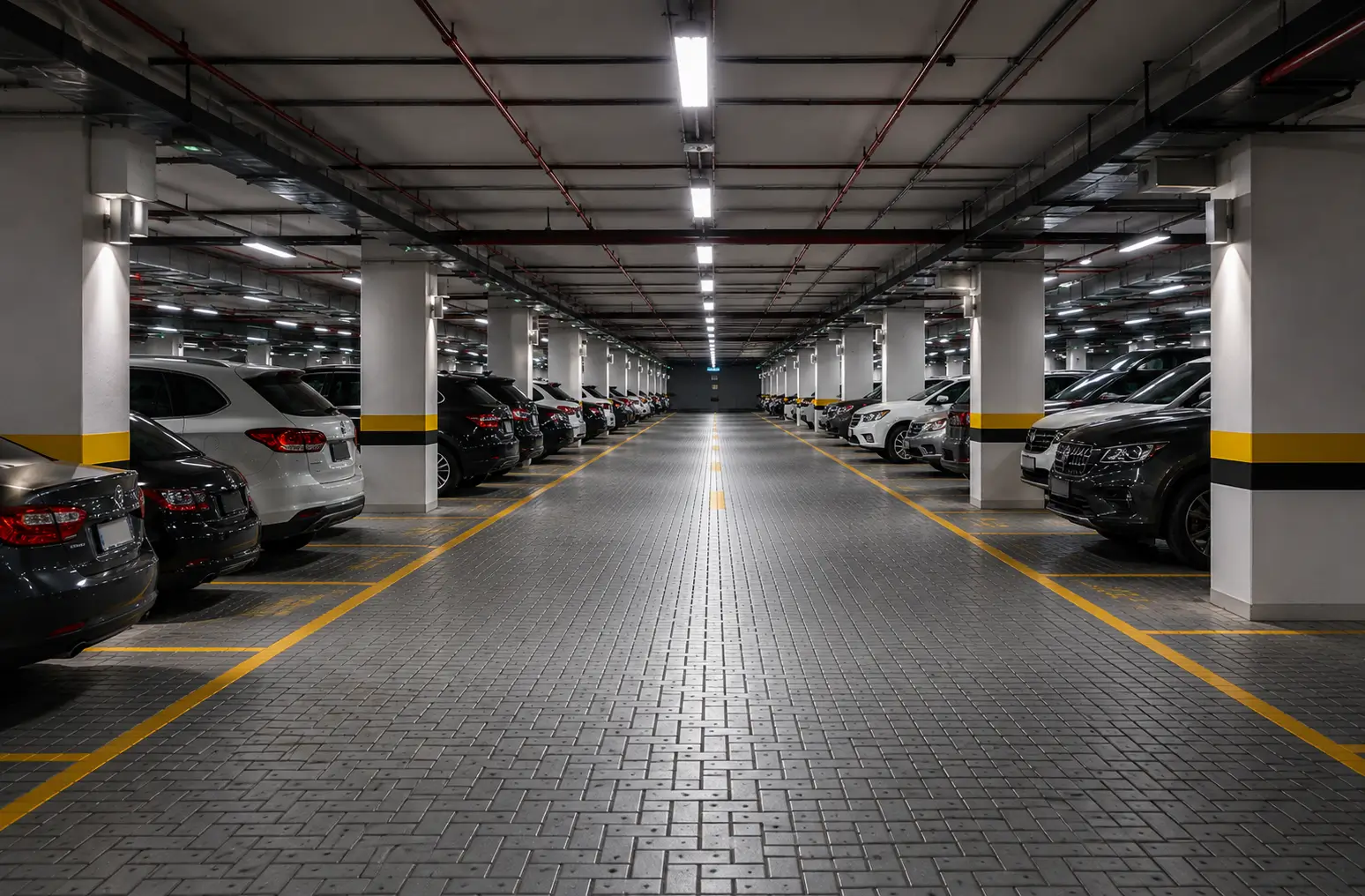
Discover how parking automation can reduce revenue leakage, improve traffic flow, and increase operational efficiency.
Why Malls Lose Money Because of Poor Parking Management
For a shopping mall, parking is more than a place where customers leave their cars.
It is the first and last part of the customer journey.
A visitor may have a great shopping experience, but if they spend 15 minutes waiting to enter or leave the parking area, that experience can quickly change.
More importantly, poor parking management can quietly cost malls money through revenue leakage, inefficient operations, congestion and lost customer satisfaction.
The problem is often not the number of parking spaces.
It is how those spaces are managed.
Where Does the Money Get Lost?
A mall parking operation can involve thousands of vehicle transactions every day.
When these transactions depend heavily on manual processes, even small inefficiencies can add up.
Common sources of loss include:
Manual ticketing errors
Incorrect parking charges
Lost or mismanaged tickets
Unauthorized parking
Revenue leakage
Excessive staff dependency
Poor vehicle tracking
Long queues
Inefficient space utilization
A small problem repeated hundreds of times can become a significant operational cost.
1. Manual Ticketing Creates Revenue Leakage
Traditional parking systems often depend on physical tickets and manual collection.
This creates several opportunities for errors.
For example, a ticket may be:
Issued incorrectly
Lost
Recorded incorrectly
Processed manually
Difficult to reconcile at the end of the day
When a mall handles a large number of vehicles, manually tracking every transaction becomes increasingly difficult.
Digital parking management can reduce dependence on these processes by creating a record of vehicle entry, parking duration and exit.
2. Long Queues Can Affect Customer Experience
Imagine arriving at a mall on a busy Saturday evening.
You see a long line of vehicles outside.
You wait to enter.
After shopping, you face another queue at the exit.
The mall hasn't just created a parking problem.
It has created a customer experience problem.
Visitors may spend less time inside the mall because they are concerned about getting stuck in the parking area.
For malls, customer convenience matters because parking is part of the overall visit.
3. Poor Parking Management Increases Staff Dependency
Manual parking operations require people to handle tasks such as:
Vehicle verification
Ticket issuance
Entry management
Payment collection
Exit verification
Record keeping
As vehicle volumes increase, additional staff may be required to maintain the same level of service.
Automation can handle many repetitive tasks and allow staff to focus on situations that actually require human intervention.
The objective isn't necessarily to eliminate staff.
It is to use staff more efficiently.
4. Unauthorized Vehicles Can Reduce Parking Availability
A parking space occupied by the wrong vehicle can create a problem for both customers and operators.
Examples include:
Unauthorized vehicles
Vehicles using reserved spaces
Unregistered users
Misuse of employee parking
Long-term parking without proper authorization
Technologies such as ANPR and RFID can help identify and manage different vehicle categories.
For example, RFID can be used for registered employees or residents, while ANPR can identify visitor vehicles.
5. Malls Need Better Parking Data
One of the biggest weaknesses of manual parking is limited visibility.
A mall manager should be able to answer questions such as:
How many vehicles entered today?
What was the busiest hour?
How long did customers stay?
Which entrance experienced the most traffic?
How much parking revenue was generated?
How many vehicles are currently inside?
Without reliable data, it becomes difficult to identify where money and time are being lost.
A modern parking management system can bring these operations into a centralized digital environment.
6. Poor Space Utilisation Can Cost Money
Parking spaces are valuable assets.
But simply having a large parking area doesn't guarantee efficient utilisation.
If drivers cannot quickly find available spaces, some areas may remain underutilized while others become congested.
Better parking management can help operators understand:
Occupancy
Peak periods
Vehicle turnover
Parking duration
User categories
This information can help malls make better operational decisions.
ANPR + RFID + Boom Barriers: A Smarter Parking Flow
Modern mall parking can combine multiple technologies.
ANPR
Automatically identifies vehicle number plates.
RFID
Provides convenient access for registered vehicles.
Boom Barriers
Control physical vehicle entry and exit.
Parking Management Software
Connects the different components and provides operational data.
A typical process can look like:
Vehicle approaches
↓
ANPR/RFID identifies the vehicle
↓
Parking system verifies access
↓
Boom barrier opens
↓
Entry is recorded
↓
Vehicle parks
↓
Exit is processed
This reduces unnecessary manual intervention and creates a more organized parking operation.
A Simple Revenue Example
Consider a hypothetical mall with:
2,000 parking transactions per day
and an average parking fee of:
₹50 per transaction
That represents a potential daily parking revenue of:
₹1,00,000
Even a small percentage of missed, incorrectly recorded or poorly managed transactions can become meaningful over a month.
The exact impact will vary from mall to mall, but the principle is simple:
When parking transactions increase, small inefficiencies can become expensive.
This is why parking automation should be evaluated not only as a technology expense, but also as an operational and revenue-management investment.
Better Parking Can Mean Better Business
A well-managed parking system can help malls improve:
Revenue visibility
Vehicle access
Parking security
Customer experience
Operational efficiency
Data accuracy
Traffic flow
The goal isn't simply to make the parking gate automatic.
The goal is to create a parking operation that is measurable, controlled and efficient.
Also read→
Hit Your Parked Car? Discover the Essential Action Plan Now
What Should Mall Owners Look for in a Parking Management System?
Before choosing a solution, mall operators should consider:
Vehicle Volume
How many vehicles enter and exit each day?
Peak Traffic
When does parking demand reach its highest point?
Entry and Exit Capacity
Can the existing gates handle peak traffic efficiently?
User Categories
Does the mall need different access rules for visitors, employees, VIPs and vendors?
Revenue Management
Can parking transactions be tracked and reconciled accurately?
Reporting
Can managers easily access occupancy, transaction and vehicle data?
Scalability
Can the system support additional gates, parking levels or future expansion?
Also read→
Types of Boom Barriers: Features, Uses and Applications
Conclusion
Poor parking management can quietly become an expensive problem for shopping malls.
Revenue leakage, manual errors, staff dependency, unauthorized access, inefficient space utilisation and long queues can all affect the overall cost of parking operations.
The solution isn't simply more parking spaces.
It is better parking management.
With technologies such as ANPR, RFID, boom barriers and integrated parking management software, malls can automate vehicle access, improve operational visibility and create a smoother experience for visitors.
For a modern shopping mall, parking shouldn't be treated as an afterthought.
It should be managed as an important part of the business.
ParkSmart provides smart parking solutions including ANPR, RFID, boom barriers and parking management systems to help shopping malls and other high-traffic properties manage vehicle access more efficiently.
Why Malls Lose Money Because of Poor Parking Management
For a shopping mall, parking is more than a place where customers leave their cars.
It is the first and last part of the customer journey.
A visitor may have a great shopping experience, but if they spend 15 minutes waiting to enter or leave the parking area, that experience can quickly change.
More importantly, poor parking management can quietly cost malls money through revenue leakage, inefficient operations, congestion and lost customer satisfaction.
The problem is often not the number of parking spaces.
It is how those spaces are managed.
Where Does the Money Get Lost?
A mall parking operation can involve thousands of vehicle transactions every day.
When these transactions depend heavily on manual processes, even small inefficiencies can add up.
Common sources of loss include:
Manual ticketing errors
Incorrect parking charges
Lost or mismanaged tickets
Unauthorized parking
Revenue leakage
Excessive staff dependency
Poor vehicle tracking
Long queues
Inefficient space utilization
A small problem repeated hundreds of times can become a significant operational cost.
1. Manual Ticketing Creates Revenue Leakage
Traditional parking systems often depend on physical tickets and manual collection.
This creates several opportunities for errors.
For example, a ticket may be:
Issued incorrectly
Lost
Recorded incorrectly
Processed manually
Difficult to reconcile at the end of the day
When a mall handles a large number of vehicles, manually tracking every transaction becomes increasingly difficult.
Digital parking management can reduce dependence on these processes by creating a record of vehicle entry, parking duration and exit.
2. Long Queues Can Affect Customer Experience
Imagine arriving at a mall on a busy Saturday evening.
You see a long line of vehicles outside.
You wait to enter.
After shopping, you face another queue at the exit.
The mall hasn't just created a parking problem.
It has created a customer experience problem.
Visitors may spend less time inside the mall because they are concerned about getting stuck in the parking area.
For malls, customer convenience matters because parking is part of the overall visit.
3. Poor Parking Management Increases Staff Dependency
Manual parking operations require people to handle tasks such as:
Vehicle verification
Ticket issuance
Entry management
Payment collection
Exit verification
Record keeping
As vehicle volumes increase, additional staff may be required to maintain the same level of service.
Automation can handle many repetitive tasks and allow staff to focus on situations that actually require human intervention.
The objective isn't necessarily to eliminate staff.
It is to use staff more efficiently.
4. Unauthorized Vehicles Can Reduce Parking Availability
A parking space occupied by the wrong vehicle can create a problem for both customers and operators.
Examples include:
Unauthorized vehicles
Vehicles using reserved spaces
Unregistered users
Misuse of employee parking
Long-term parking without proper authorization
Technologies such as ANPR and RFID can help identify and manage different vehicle categories.
For example, RFID can be used for registered employees or residents, while ANPR can identify visitor vehicles.
5. Malls Need Better Parking Data
One of the biggest weaknesses of manual parking is limited visibility.
A mall manager should be able to answer questions such as:
How many vehicles entered today?
What was the busiest hour?
How long did customers stay?
Which entrance experienced the most traffic?
How much parking revenue was generated?
How many vehicles are currently inside?
Without reliable data, it becomes difficult to identify where money and time are being lost.
A modern parking management system can bring these operations into a centralized digital environment.
6. Poor Space Utilisation Can Cost Money
Parking spaces are valuable assets.
But simply having a large parking area doesn't guarantee efficient utilisation.
If drivers cannot quickly find available spaces, some areas may remain underutilized while others become congested.
Better parking management can help operators understand:
Occupancy
Peak periods
Vehicle turnover
Parking duration
User categories
This information can help malls make better operational decisions.
ANPR + RFID + Boom Barriers: A Smarter Parking Flow
Modern mall parking can combine multiple technologies.
ANPR
Automatically identifies vehicle number plates.
RFID
Provides convenient access for registered vehicles.
Boom Barriers
Control physical vehicle entry and exit.
Parking Management Software
Connects the different components and provides operational data.
A typical process can look like:
Vehicle approaches
↓
ANPR/RFID identifies the vehicle
↓
Parking system verifies access
↓
Boom barrier opens
↓
Entry is recorded
↓
Vehicle parks
↓
Exit is processed
This reduces unnecessary manual intervention and creates a more organized parking operation.
A Simple Revenue Example
Consider a hypothetical mall with:
2,000 parking transactions per day
and an average parking fee of:
₹50 per transaction
That represents a potential daily parking revenue of:
₹1,00,000
Even a small percentage of missed, incorrectly recorded or poorly managed transactions can become meaningful over a month.
The exact impact will vary from mall to mall, but the principle is simple:
When parking transactions increase, small inefficiencies can become expensive.
This is why parking automation should be evaluated not only as a technology expense, but also as an operational and revenue-management investment.
Better Parking Can Mean Better Business
A well-managed parking system can help malls improve:
Revenue visibility
Vehicle access
Parking security
Customer experience
Operational efficiency
Data accuracy
Traffic flow
The goal isn't simply to make the parking gate automatic.
The goal is to create a parking operation that is measurable, controlled and efficient.
Also read→
Hit Your Parked Car? Discover the Essential Action Plan Now
What Should Mall Owners Look for in a Parking Management System?
Before choosing a solution, mall operators should consider:
Vehicle Volume
How many vehicles enter and exit each day?
Peak Traffic
When does parking demand reach its highest point?
Entry and Exit Capacity
Can the existing gates handle peak traffic efficiently?
User Categories
Does the mall need different access rules for visitors, employees, VIPs and vendors?
Revenue Management
Can parking transactions be tracked and reconciled accurately?
Reporting
Can managers easily access occupancy, transaction and vehicle data?
Scalability
Can the system support additional gates, parking levels or future expansion?
Also read→
Types of Boom Barriers: Features, Uses and Applications
Conclusion
Poor parking management can quietly become an expensive problem for shopping malls.
Revenue leakage, manual errors, staff dependency, unauthorized access, inefficient space utilisation and long queues can all affect the overall cost of parking operations.
The solution isn't simply more parking spaces.
It is better parking management.
With technologies such as ANPR, RFID, boom barriers and integrated parking management software, malls can automate vehicle access, improve operational visibility and create a smoother experience for visitors.
For a modern shopping mall, parking shouldn't be treated as an afterthought.
It should be managed as an important part of the business.
ParkSmart provides smart parking solutions including ANPR, RFID, boom barriers and parking management systems to help shopping malls and other high-traffic properties manage vehicle access more efficiently.

Automated Gate Access & Parking Revenue Optimization
Eliminate manual errors and stop revenue leakage with automated RFID boom barriers, live occupancy tracking, and multi-mode POS payment processing for commercial properties.
144,200
+
Cars Managed by ParkSmart
110,100
+
Transactions Processed Daily
2,900
+
Parking Locations Integrated
299,100
+
Satisified Users
Increase Efficiency, Maximize Profit
Eliminate manual errors and stop revenue leakage with automated RFID boom barriers, live occupancy tracking, and multi-mode POS payment processing for commercial properties.
144,200
+
Cars Managed by ParkSmart
110,100
+
Transactions Processed Daily
2,900
+
Parking Locations Integrated
299,100
+
Satisified Users
Automated Gate Access & Parking Revenue Optimization
Eliminate manual errors and stop revenue leakage with automated RFID boom barriers, live occupancy tracking, and multi-mode POS payment processing for commercial properties.
144,200
+
Cars Managed by ParkSmart
110,100
+
Transactions Processed Daily
2,900
+
Parking Locations Integrated
299,100
+
Satisified Users
