Back
Parking Revenue Leakage in Commercial Properties Explained
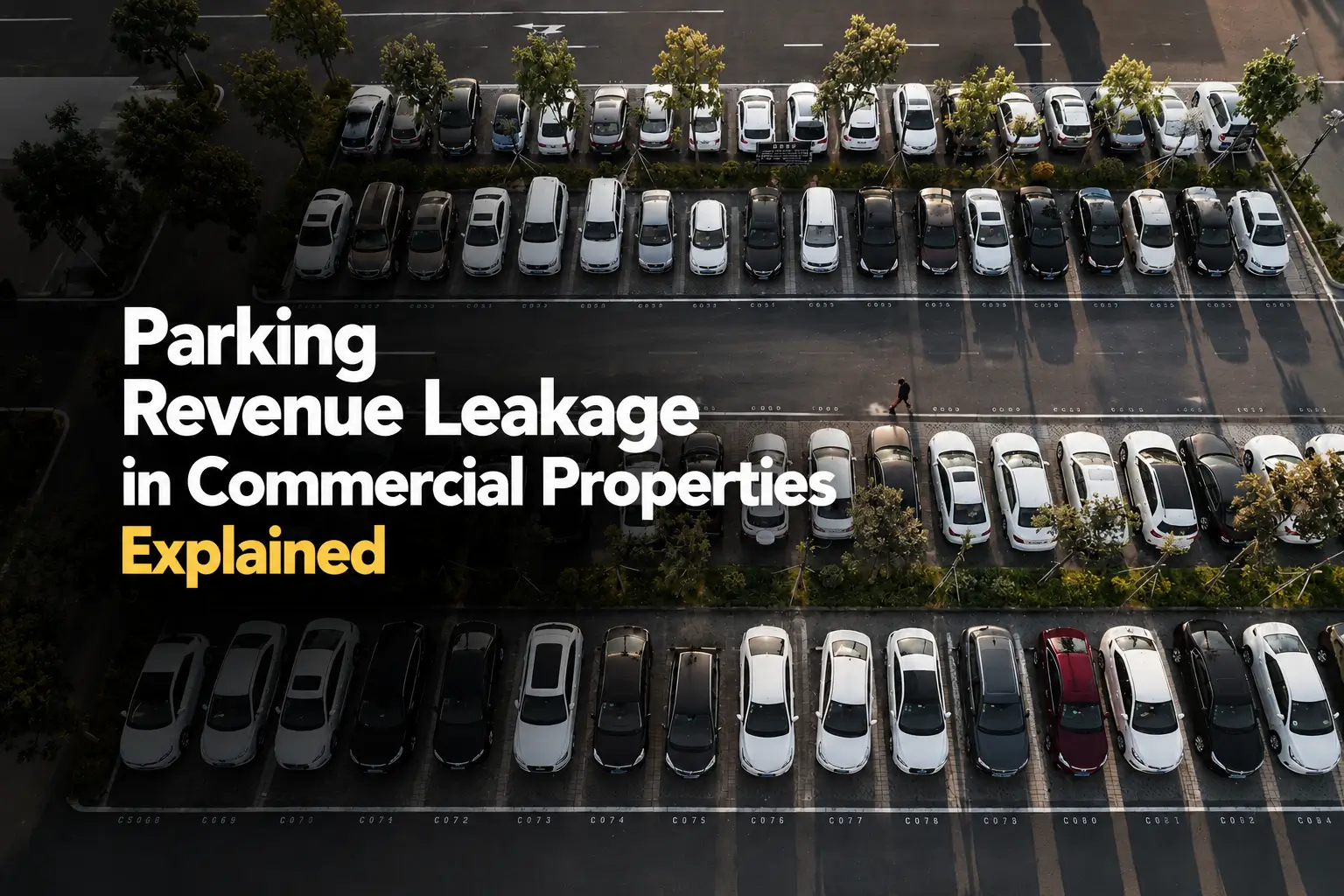
How Parking Revenue Leakage Reduces Profits in Commercial Properties
Parking Revenue Leakage: Hidden Losses Most Property Owners Ignore
Most property owners closely monitor rent collections, maintenance expenses, and utility costs. Parking revenue, however, often receives far less attention.
The reason is simple. Parking income usually arrives in small amounts throughout the day. A ₹40 ticket here, a ₹60 payment there. Nothing appears unusual on the surface.
But talk to facility managers at busy malls, hospitals, commercial towers, or IT parks and a common concern often comes up: the numbers don't always add up.
A parking area may feel busier than ever, yet monthly collections remain almost unchanged. Exit lanes stay crowded, vehicle movement increases, but revenue growth fails to match traffic growth.
This is where parking revenue leakage becomes a serious concern.
Unlike major financial losses that attract immediate attention, parking leakage often happens quietly through everyday operational gaps.
What Exactly Is Parking Revenue Leakage?
Parking revenue leakage refers to income that should have been collected but never reaches the final revenue report.
This does not automatically mean theft or fraud.
In many cases, the causes are surprisingly ordinary:
Missed vehicle entries
Incorrect billing
Lost parking tickets
Cash handling mistakes
Incomplete transaction records
Weak reporting processes
Individually, these incidents may seem insignificant. Across hundreds or thousands of vehicles every week, they can create a noticeable financial impact.
Why Commercial Properties Face This Problem
A small office building with limited vehicle movement may manage parking manually without major difficulties.
The situation changes when traffic volume increases.
Consider a typical Saturday at a shopping mall. Vehicles continue arriving every few seconds. Security staff focus on keeping traffic moving. Cashiers handle continuous transactions. Supervisors monitor congestion at entry and exit points.
During these busy periods, operational accuracy often takes a back seat to traffic management.
That is where leakage begins.
Missed Vehicle Entries
During rush hours, staff may prioritize reducing queues rather than recording every transaction perfectly.
If a vehicle enters without a proper parking record, recovering the correct fee later becomes difficult.
One missing entry may not seem important. Hundreds of missing entries across months tell a different story.
Cash Collection Challenges
Cash handling remains one of the biggest pain points in parking operations.
Anyone who has managed a busy parking facility knows how quickly mistakes can happen.
A cashier may issue the wrong amount of change. A payment may not be recorded correctly. A receipt may never be generated.
Most of these situations are not intentional. They are simply by-products of high-volume manual operations.
Ticket-Related Problems
Paper tickets create another layer of complexity.
Properties commonly deal with:
Lost tickets
Damaged tickets
Duplicate tickets
Manual corrections
Unclear transaction records
Every exception requires additional verification, increasing the possibility of revenue gaps.
Shift Change Confusion
Many facilities operate around the clock.
When one team hands operations over to another, management often struggles to answer simple questions:
How many vehicles entered?
How many exited?
How much revenue was collected?
Does the collection match vehicle volume?
Without reliable records, verifying these numbers becomes difficult.
The Numbers Can Be Bigger Than Expected
Let's look at a practical example.
Assume a commercial property receives approximately 1,200 vehicles daily.
Average parking fee: ₹40
Expected daily collection:
1,200 × ₹40 = ₹48,000
Now imagine that only 10% of transactions are affected by missed entries, ticket issues, billing errors, or reporting gaps.
Potential daily loss:
₹4,800
Potential monthly loss:
More than ₹1.4 lakh
For large malls, IT parks, hospitals, and mixed-use developments, the actual figures can be considerably higher.
Common Warning Signs
Many property owners do not discover parking leakage through audits.
Instead, they notice patterns.
Some common warning signs include:
Revenue remains flat despite higher traffic
Frequent cash mismatches
Long queues at payment counters
Incomplete parking records
Regular disputes about parking charges
Vehicle counts that seem inconsistent with collections
When several of these issues appear together, parking operations deserve closer attention.
How Commercial Properties Are Responding
Over the past few years, many facilities have moved away from fully manual parking operations.
The goal is not simply automation.
The real objective is visibility.
Management teams want to know:
How many vehicles entered?
How many exited?
How much revenue was collected?
Where are operational gaps occurring?
Modern parking systems help answer these questions more accurately.
Digital Vehicle Tracking
Technologies such as RFID access control, ANPR-based vehicle recognition, QR-based access systems, and digital ticketing automatically record vehicle movement.
This reduces dependency on manual logs and paper-based records.
Digital Payment Records
When payments are recorded electronically, management gains a clearer picture of collections.
Transaction history becomes easier to verify and audit.
Live Reporting
Instead of waiting until the end of the day, managers can monitor:
Vehicle volume
Occupancy levels
Collection trends
Peak traffic periods
Revenue performance
This allows operational issues to be identified much earlier.
Before Investing in a New Parking System
Property owners should first understand where their existing problems originate.
Questions worth asking include:
Are vehicle counts accurate?
How much cash handling still exists?
How are exceptions managed?
Can revenue reports be independently verified?
Is parking traffic expected to grow?
The answers often reveal whether operational improvements are needed.
Also read→
EV vs Petrol vs Diesel: Which Car Is Best in India 2026
FAQs
What is parking revenue leakage?
Parking revenue leakage refers to income lost because of missed transactions, billing errors, ticket issues, reporting gaps, or other operational weaknesses.
Is revenue leakage always caused by fraud?
No. Human errors, outdated processes, and manual systems are often responsible for a large portion of parking revenue losses.
Which properties face this issue most frequently?
Shopping malls, IT parks, hospitals, commercial towers, event venues, and other high-traffic properties commonly encounter revenue leakage challenges.
How can parking operations be monitored more effectively?
Accurate vehicle tracking, digital payments, and detailed reporting provide better visibility into parking performance and collections.
Also read→
ParkSmart Valet: Fast, Secure & Smart Valet Parking Solutions
Conclusion
Parking revenue leakage rarely happens because of one major mistake. More often, it develops through dozens of small operational gaps that go unnoticed for months.
A missed ticket, an incomplete entry record, a billing error during peak hours—each incident appears minor on its own. Together, they can quietly reduce parking revenue and affect overall property performance.
As vehicle volumes continue to grow across commercial properties, visibility and accountability have become just as important as traffic management itself. The properties that monitor parking operations closely are usually the ones that identify revenue gaps before they become expensive problems.
Parking Revenue Leakage: Hidden Losses Most Property Owners Ignore
Most property owners closely monitor rent collections, maintenance expenses, and utility costs. Parking revenue, however, often receives far less attention.
The reason is simple. Parking income usually arrives in small amounts throughout the day. A ₹40 ticket here, a ₹60 payment there. Nothing appears unusual on the surface.
But talk to facility managers at busy malls, hospitals, commercial towers, or IT parks and a common concern often comes up: the numbers don't always add up.
A parking area may feel busier than ever, yet monthly collections remain almost unchanged. Exit lanes stay crowded, vehicle movement increases, but revenue growth fails to match traffic growth.
This is where parking revenue leakage becomes a serious concern.
Unlike major financial losses that attract immediate attention, parking leakage often happens quietly through everyday operational gaps.
What Exactly Is Parking Revenue Leakage?
Parking revenue leakage refers to income that should have been collected but never reaches the final revenue report.
This does not automatically mean theft or fraud.
In many cases, the causes are surprisingly ordinary:
Missed vehicle entries
Incorrect billing
Lost parking tickets
Cash handling mistakes
Incomplete transaction records
Weak reporting processes
Individually, these incidents may seem insignificant. Across hundreds or thousands of vehicles every week, they can create a noticeable financial impact.
Why Commercial Properties Face This Problem
A small office building with limited vehicle movement may manage parking manually without major difficulties.
The situation changes when traffic volume increases.
Consider a typical Saturday at a shopping mall. Vehicles continue arriving every few seconds. Security staff focus on keeping traffic moving. Cashiers handle continuous transactions. Supervisors monitor congestion at entry and exit points.
During these busy periods, operational accuracy often takes a back seat to traffic management.
That is where leakage begins.
Missed Vehicle Entries
During rush hours, staff may prioritize reducing queues rather than recording every transaction perfectly.
If a vehicle enters without a proper parking record, recovering the correct fee later becomes difficult.
One missing entry may not seem important. Hundreds of missing entries across months tell a different story.
Cash Collection Challenges
Cash handling remains one of the biggest pain points in parking operations.
Anyone who has managed a busy parking facility knows how quickly mistakes can happen.
A cashier may issue the wrong amount of change. A payment may not be recorded correctly. A receipt may never be generated.
Most of these situations are not intentional. They are simply by-products of high-volume manual operations.
Ticket-Related Problems
Paper tickets create another layer of complexity.
Properties commonly deal with:
Lost tickets
Damaged tickets
Duplicate tickets
Manual corrections
Unclear transaction records
Every exception requires additional verification, increasing the possibility of revenue gaps.
Shift Change Confusion
Many facilities operate around the clock.
When one team hands operations over to another, management often struggles to answer simple questions:
How many vehicles entered?
How many exited?
How much revenue was collected?
Does the collection match vehicle volume?
Without reliable records, verifying these numbers becomes difficult.
The Numbers Can Be Bigger Than Expected
Let's look at a practical example.
Assume a commercial property receives approximately 1,200 vehicles daily.
Average parking fee: ₹40
Expected daily collection:
1,200 × ₹40 = ₹48,000
Now imagine that only 10% of transactions are affected by missed entries, ticket issues, billing errors, or reporting gaps.
Potential daily loss:
₹4,800
Potential monthly loss:
More than ₹1.4 lakh
For large malls, IT parks, hospitals, and mixed-use developments, the actual figures can be considerably higher.
Common Warning Signs
Many property owners do not discover parking leakage through audits.
Instead, they notice patterns.
Some common warning signs include:
Revenue remains flat despite higher traffic
Frequent cash mismatches
Long queues at payment counters
Incomplete parking records
Regular disputes about parking charges
Vehicle counts that seem inconsistent with collections
When several of these issues appear together, parking operations deserve closer attention.
How Commercial Properties Are Responding
Over the past few years, many facilities have moved away from fully manual parking operations.
The goal is not simply automation.
The real objective is visibility.
Management teams want to know:
How many vehicles entered?
How many exited?
How much revenue was collected?
Where are operational gaps occurring?
Modern parking systems help answer these questions more accurately.
Digital Vehicle Tracking
Technologies such as RFID access control, ANPR-based vehicle recognition, QR-based access systems, and digital ticketing automatically record vehicle movement.
This reduces dependency on manual logs and paper-based records.
Digital Payment Records
When payments are recorded electronically, management gains a clearer picture of collections.
Transaction history becomes easier to verify and audit.
Live Reporting
Instead of waiting until the end of the day, managers can monitor:
Vehicle volume
Occupancy levels
Collection trends
Peak traffic periods
Revenue performance
This allows operational issues to be identified much earlier.
Before Investing in a New Parking System
Property owners should first understand where their existing problems originate.
Questions worth asking include:
Are vehicle counts accurate?
How much cash handling still exists?
How are exceptions managed?
Can revenue reports be independently verified?
Is parking traffic expected to grow?
The answers often reveal whether operational improvements are needed.
Also read→
EV vs Petrol vs Diesel: Which Car Is Best in India 2026
FAQs
What is parking revenue leakage?
Parking revenue leakage refers to income lost because of missed transactions, billing errors, ticket issues, reporting gaps, or other operational weaknesses.
Is revenue leakage always caused by fraud?
No. Human errors, outdated processes, and manual systems are often responsible for a large portion of parking revenue losses.
Which properties face this issue most frequently?
Shopping malls, IT parks, hospitals, commercial towers, event venues, and other high-traffic properties commonly encounter revenue leakage challenges.
How can parking operations be monitored more effectively?
Accurate vehicle tracking, digital payments, and detailed reporting provide better visibility into parking performance and collections.
Also read→
ParkSmart Valet: Fast, Secure & Smart Valet Parking Solutions
Conclusion
Parking revenue leakage rarely happens because of one major mistake. More often, it develops through dozens of small operational gaps that go unnoticed for months.
A missed ticket, an incomplete entry record, a billing error during peak hours—each incident appears minor on its own. Together, they can quietly reduce parking revenue and affect overall property performance.
As vehicle volumes continue to grow across commercial properties, visibility and accountability have become just as important as traffic management itself. The properties that monitor parking operations closely are usually the ones that identify revenue gaps before they become expensive problems.

Automated Gate Access & Parking Revenue Optimization
Eliminate manual errors and stop revenue leakage with automated RFID boom barriers, live occupancy tracking, and multi-mode POS payment processing for commercial properties.
144,200
+
Cars Managed by ParkSmart
110,100
+
Transactions Processed Daily
2,900
+
Parking Locations Integrated
299,100
+
Satisified Users
Increase Efficiency, Maximize Profit
Eliminate manual errors and stop revenue leakage with automated RFID boom barriers, live occupancy tracking, and multi-mode POS payment processing for commercial properties.
144,200
+
Cars Managed by ParkSmart
110,100
+
Transactions Processed Daily
2,900
+
Parking Locations Integrated
299,100
+
Satisified Users
Automated Gate Access & Parking Revenue Optimization
Eliminate manual errors and stop revenue leakage with automated RFID boom barriers, live occupancy tracking, and multi-mode POS payment processing for commercial properties.
144,200
+
Cars Managed by ParkSmart
110,100
+
Transactions Processed Daily
2,900
+
Parking Locations Integrated
299,100
+
Satisified Users
