Back
Why Residential Societies Will Be Forced to Digitise Parking
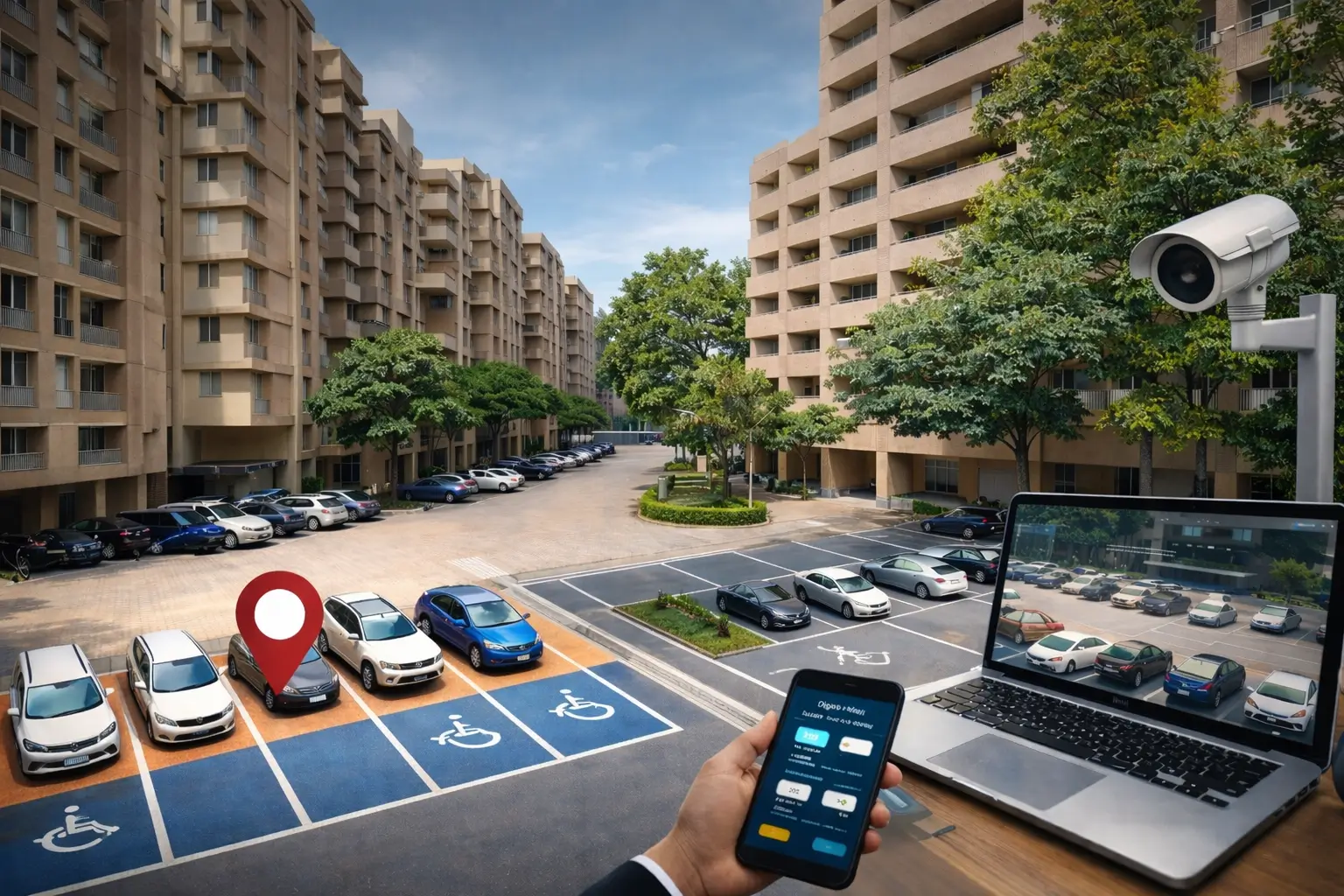
Rising vehicle density, legal risks, and urban rules are making manual parking systems unworkable.
Residential parking in Indian cities is quietly moving toward a breaking point. What was once managed with handwritten registers, security guards’ memory, or informal rules is now becoming unworkable. Rising vehicle density, stricter urban regulations, and accountability demands are forcing housing societies to rethink how parking is managed.
Digitisation is no longer an upgrade or convenience. For many residential societies, it is becoming an operational necessity.
The Parking Pressure Inside Housing Societies
Urban residential complexes were designed to accommodate far fewer vehicles than they currently host. In many societies, the number of cars has doubled, yet there has been no increase in parking capacity. This imbalance creates daily friction between residents, visitors, tenants, and security staff.
Manual systems struggle to answer basic questions:
Who is parked where?
Is the vehicle authorised?
How long has a visitor stayed?
Has a resident exceeded allotted parking rights?
Without structured data, societies rely on human judgment, which leads to disputes, favouritism, and enforcement gaps.
Legal and Accountability Risks Are Increasing
Housing societies today operate under closer scrutiny than before. Resident Welfare Associations (RWAs) are increasingly held accountable for safety, access control, and compliance.
If an unauthorised vehicle enters and causes damage or theft, societies must explain:
How was entry permitted
Whether records were maintained
Whether access control was enforced consistently
Manual parking logs offer a weak legal defence. Digitised parking systems create timestamped, verifiable records that protect societies during disputes, insurance claims, and police inquiries.
Visitor Parking Is the Biggest Weak Point
Visitor parking is where most residential parking problems originate.
Security guards cannot reliably track:
Entry and exit times
Multiple visits by the same vehicle
Overnight stays
Commercial misuse (delivery vans, taxis, vendors)
Digitised systems automatically log visitor details, restrict duration, and alert management when rules are violated. This level of control is impossible with paper registers or verbal approvals.
Also read→
Boom Barriers: Types, Benefits & Ideal Use Cases for Smarter Access Control
Enforcement Without Conflict
One major reason societies hesitate to enforce parking rules is conflict. Residents resist fines, warnings, or towing when enforcement feels arbitrary.
Digital parking systems shift enforcement from people to systems:
Rules are predefined
Violations are system-generated
Alerts are automatic
Records are neutral and transparent
This reduces arguments and removes personal bias from decision-making.
Integration With Access Control Is Becoming Standard
Modern residential societies are no longer just gated—they are digitally controlled.
Parking digitisation integrates naturally with:
Boom barriers
RFID tags or FASTag-based access
ANPR cameras
Resident mobile apps
When parking is linked to vehicle identity and access control, societies gain a complete movement trail without increasing manpower.
Urban Policy Is Pushing the Change
Municipal bodies are actively discouraging unmanaged private parking overflow. Many cities are tightening rules around:
Street parking spillover from societies
Emergency vehicle access
Fire safety compliance
Authorities increasingly expect societies to self-regulate parking digitally rather than rely on public infrastructure.
Societies that fail to manage internal parking efficiently often face penalties, notices, or restrictions during approvals and renewals.
Financial Transparency and Revenue Control
Paid visitor parking, temporary parking permits, and penalty charges are common in large societies. Manual cash handling creates leakage, disputes, and audit issues.
Digitised parking enables:
Automated billing
Digital payment records
Transparent accounting
Audit-ready reports
This protects management committees and simplifies annual audits.
Residents Expect App-Based Convenience
Today’s residents are accustomed to digital services for everything—from groceries to security approvals. Parking is no exception.
Residents expect:
Parking slot visibility
Visitor pre-approval
Entry notifications
Violation alerts
Societies that do not offer this experience increasingly face resident dissatisfaction and management pressure.
What Will Force the Shift—Not Just Encourage It
Digitisation will not happen because it is trendy. It will happen because manual systems will fail under pressure from:
Higher vehicle density
Legal accountability
Visitor abuse
Security risks
Resident expectations
Regulatory oversight
Once failure becomes routine, digitisation becomes unavoidable.
Also read→
How to Get Vehicle NOC from RTO: Complete Step Guide
Final Thought
Residential parking is no longer a background operational issue. It sits at the intersection of security, legality, fairness, and urban discipline.
Housing societies that digitise early gain control, transparency, and resident trust. Those who delay will be forced to adopt technology reactively—often after conflicts, penalties, or incidents.
Digitised parking is not the future of residential societies.
It is rapidly becoming the minimum standard.