Back
Why Paid Street Parking Will Expand in Indian Cities 2026
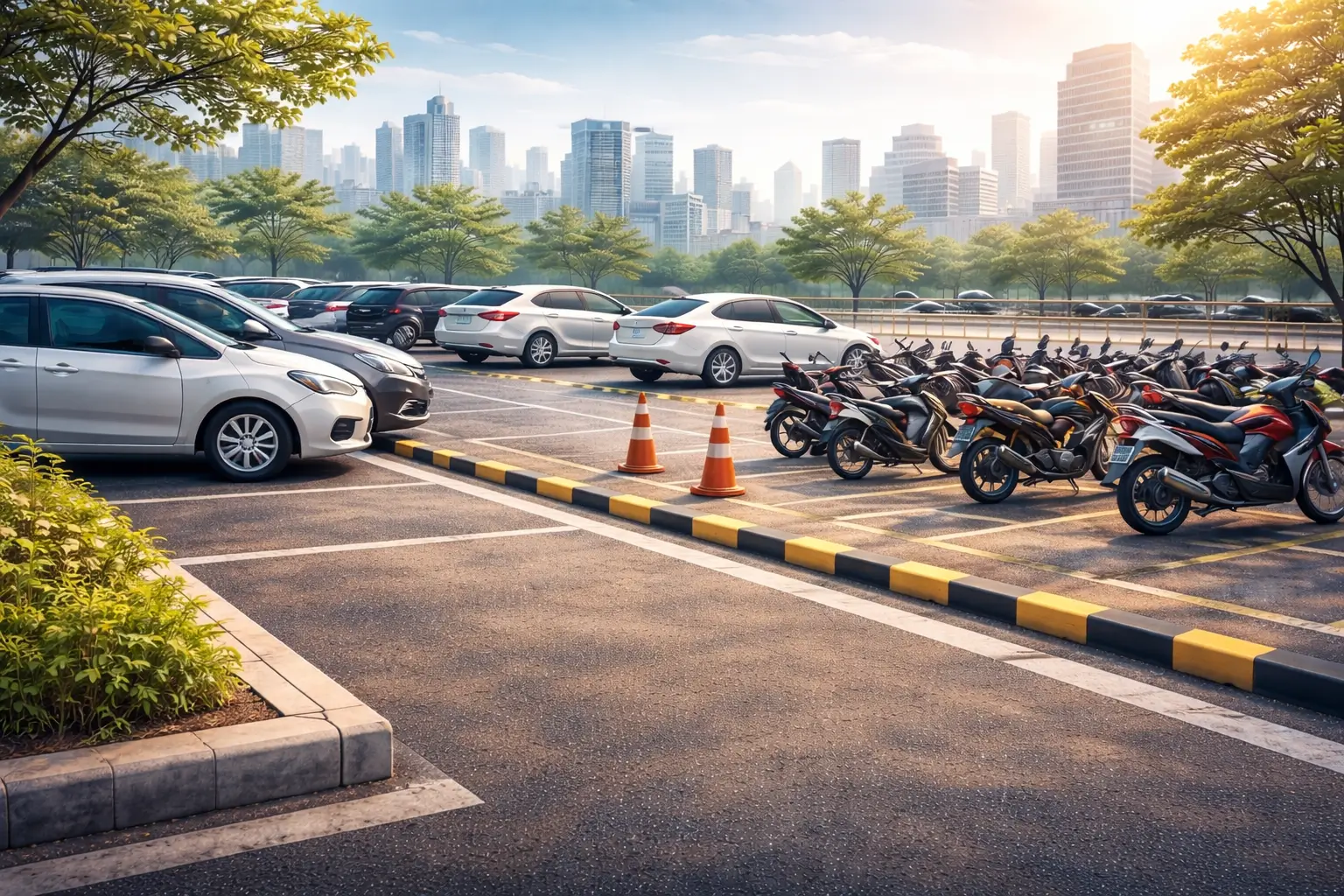
Explains why Indian cities are rapidly shifting toward regulated paid street parking
Free street parking in Indian cities has survived for decades not because it worked, but because there was no system strong enough to replace it. That gap is closing fast. By 2026, paid street parking will no longer be limited to busy markets or premium business districts. It will quietly spread across neighbourhood roads, mixed-use streets, and residential corridors.
A single rule or announcement does not drive this change. It is the result of multiple pressures converging at the same time.
Streets Were Never Meant to Store Vehicles
Most urban roads in India were designed for movement, not long-term parking. Yet over time, parked vehicles began occupying large portions of carriageways, shrinking usable road width without any formal decision.
As vehicle ownership rises, this informal arrangement has reached a breaking point. Streets that once handled two lanes of traffic now function like single-lane bottlenecks. Emergency access, public transport movement, and even pedestrian safety are compromised.
Paid parking is emerging as a corrective measure — not to remove vehicles entirely, but to limit how long public space can be occupied by private assets.
Cities Are Shifting From “Free Access” to “Managed Access”
Urban planners are moving away from the idea that public roads must always be free for private parking. The new thinking is simple:
Public space is limited, and its use must be regulated.
Paid street parking introduces time discipline. Vehicles are allowed, but not indefinitely. Once time becomes a cost, behaviour changes. Long-duration parking is reduced. Short-stay turnover improves. Congestion eases without building a single new road.
By 2026, more cities will treat parking as a management lever, not a convenience.
Enforcement No Longer Depends on Manpower
Earlier attempts at paid street parking failed mainly due to weak enforcement. Manual ticketing relied on attendants, paper slips, and inconsistent checks. That model could not scale.
Today, enforcement is becoming invisible and automated. Cameras read number plates. Systems track duration. Payments are digital. Violations are logged without confrontation.
Once technology removes human dependency, expansion becomes easy. This is one of the strongest reasons paid parking will grow rapidly in the next two years.
Municipal Finances Are Under Pressure
Urban local bodies are expected to fund road upkeep, traffic systems, signage, and smart infrastructure, but their income sources are limited. Raising taxes is politically sensitive. Parking fees are not.
Paid street parking creates a steady revenue stream without introducing a new tax burden. It also aligns with user-pays logic: those who occupy public road space contribute to its upkeep.
As budgets tighten, cities will naturally expand systems that generate predictable income.
Also read→
Future of EV Parking Stations in India for Smart Cities
Residential Streets Are No Longer Protected Zones
For years, residential streets were assumed to be free parking areas. That assumption is eroding.
Dense neighbourhoods face issues such as:
Non-resident vehicles occupy space all day
Commercial traffic parking overnight
Blocked access for residents and emergency vehicles
Cities are responding by introducing paid or permit-based parking in residential areas. The goal is not revenue alone, but access control.
By 2026, many residential streets will have regulated parking hours, even if charges are minimal.
Digital Payments Removed the Friction Barrier
Public resistance to paid parking often came from inconvenience, not cost. Cash collection, unclear rates, and poor receipts created distrust.
UPI-based payments, QR codes, and app-based systems have changed that experience. Paying for parking is now faster than searching for a free space.
As friction disappears, compliance improves — making expansion socially acceptable.
Parking Policy Is Being Linked to Traffic and Pollution Goals
Cities are no longer treating parking as a standalone issue. It is being connected to congestion control, emission reduction, and public transport prioritisation.
When street parking is free, people drive even for short trips. When it is priced, behaviour shifts naturally. This aligns with broader mobility goals without aggressive enforcement.
Paid parking is becoming a silent regulator of urban movement.
What Vehicle Owners Should Expect by 2026
Drivers should prepare for:
Fewer unregulated roadside parking zones
Time-based pricing replacing flat fees
Camera-based monitoring instead of attendants
Limited tolerance for overstays
Street parking will still exist, but it will no longer be casual.
Also read→
How to Get Vehicle NOC from RTO: Complete Step Guide
Final Thoughts
Paid street parking is not about penalising drivers. It is about correcting decades of unplanned road usage. As cities grow denser and smarter, unmanaged parking becomes an urban liability.
By 2026, paid street parking will expand not because cities want to charge more, but because they can no longer afford disorder on public roads.
For clear, practical insights on parking systems, urban mobility, and vehicle compliance, Parksmart continues to decode what’s changing — before it affects you.